

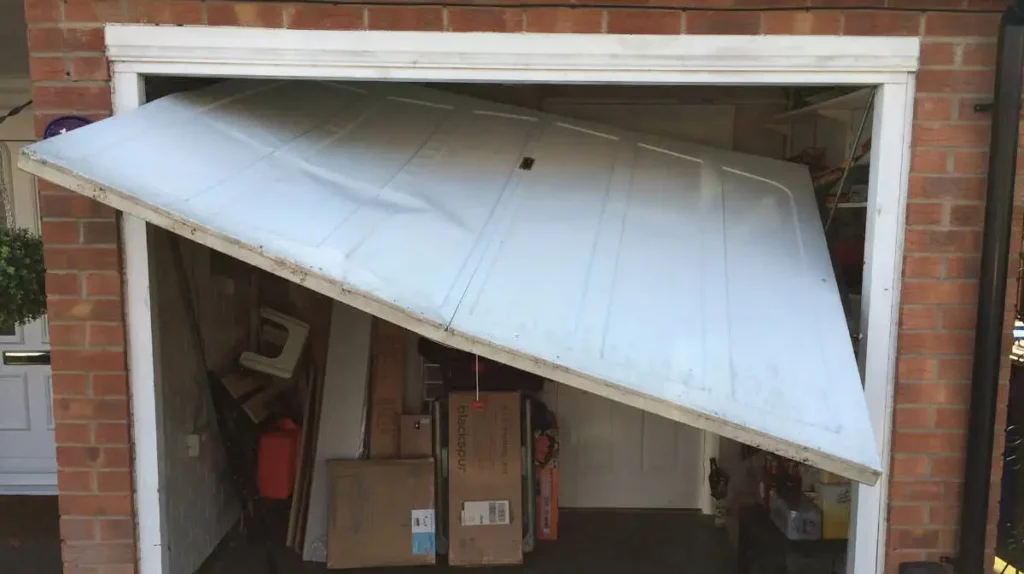
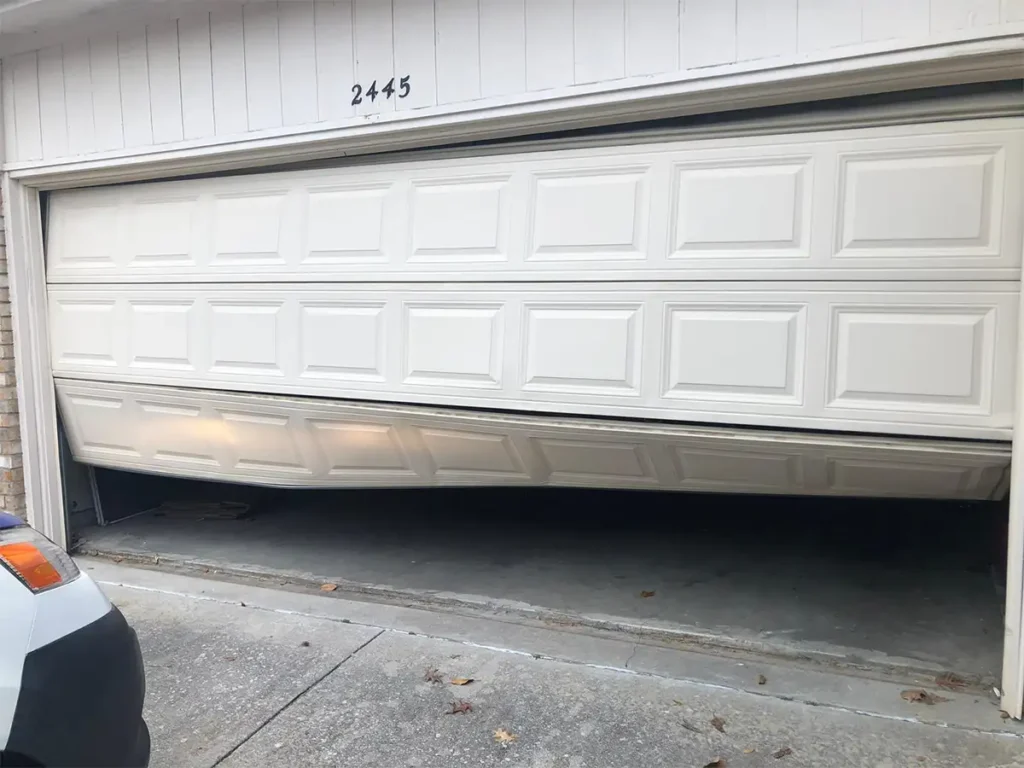
A garage door off track is one of the most common and dangerous problems you can face. The door is heavy, often weighing a considerable amount, and when it’s not securely on its tracks, it can fall suddenly and without warning.
If your door is off its tracks, it’s not just an inconvenience, it’s a serious safety risk. This guide explains the risks, the common causes, and what to do if you find yourself in this situation. Most importantly, we’ll cover how to use the emergency release safely and why you should always call a professional for the repair.
New to garage doors? Start with our complete guide to garage doors for everything you need to know.
The Risks of a Garage Door Off Track
A garage door that has come off its tracks is unstable. It’s no longer being guided properly, which means it can fall, bind, or shift unexpectedly. Here’s why that’s so dangerous.
It Can Fall Suddenly
The tracks are designed to guide the door smoothly and keep it secure. When the door comes off its tracks, it loses that guidance. The door could fall suddenly, causing serious injury or crushing anything underneath it. This is particularly dangerous if you have children, pets, or valuable items in your garage.
It Can Cause Further Damage
Using a door that’s off its tracks can bend the panels, damage the tracks, or even break the springs. A small problem can quickly become a much bigger, more expensive repair.
It Could Trap Your Car
If the door is stuck open or closed, you could find yourself unable to get your car out. This can be a major problem if you need to leave in a hurry for work, an emergency, or a school run.
It’s a Security Risk
A door that’s off its tracks may not close properly, leaving your garage and home vulnerable to intruders.
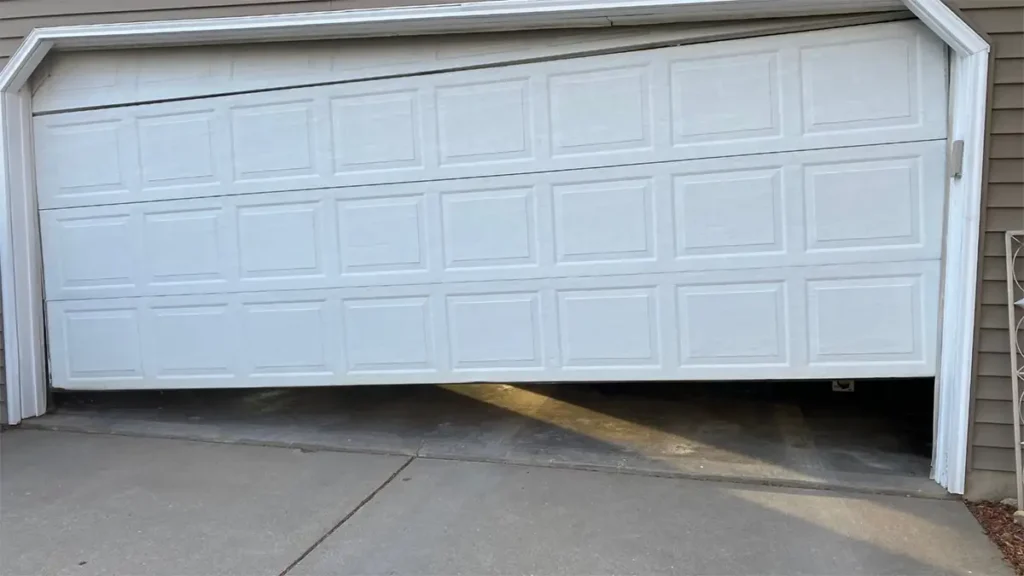
Common Causes of a Garage Door Off Track
Understanding why your door came off its tracks can help you prevent it from happening again.
Impact Damage
This is the most common cause. Bumping the door with a car, hitting it with a heavy object, or even a child’s football can knock the door off its tracks. Even a small impact can displace the rollers or bend the tracks, causing the door to come off.
Worn or Damaged Rollers
The rollers are the wheels that guide the door along the tracks. Over time, they can wear down, crack, or become damaged. When a roller fails, the door can slip off the track.
Bent or Misaligned Tracks
The tracks themselves can become bent, especially after an impact. Even a slight bend can cause the rollers to lose their alignment and the door to come off the tracks.
Loose Hardware
Bolts and brackets that hold the tracks in place can work loose over time. When this happens, the tracks can shift, creating a gap that the rollers can slip through.
Broken Cables or Springs
The springs and cables work in sync together to lift the door. If a cable breaks or a spring damaged, the garage door can become unbalanced and in result derail from its tracks.
Lack of Maintenance
A poorly maintained door is more likely to come off its tracks. Regular lubrication and visual inspections can catch small problems before they become serious.
What to Do if Your Door Comes Off Track
If your garage door has come off its tracks, the first thing to remember is: don’t panic. Here’s what to do.
Don’t Try to Force It
The most important rule is: do not try to force the door open or closed. This can cause further damage and increase the risk of injury. If the door is already off its tracks, forcing it will only make things worse.
Secure the Area
If the door is off its tracks, it’s unstable. Keep children, pets, and anyone else away from the door. It’s important not to park near the garage door until it is fixed to prevent potential damage to your car or door.
Assess the Situation
Take a look at the door. Is it completely off the tracks? Or has it just come out of a roller? Is the cable snapped? If you’re unsure, it’s safer to assume it’s a job for a professional.
Use the Emergency Release if You Need Access
If you need to get your car out or access the garage, you can use the emergency release cord. This disengages the opener, allowing you to move the door manually.
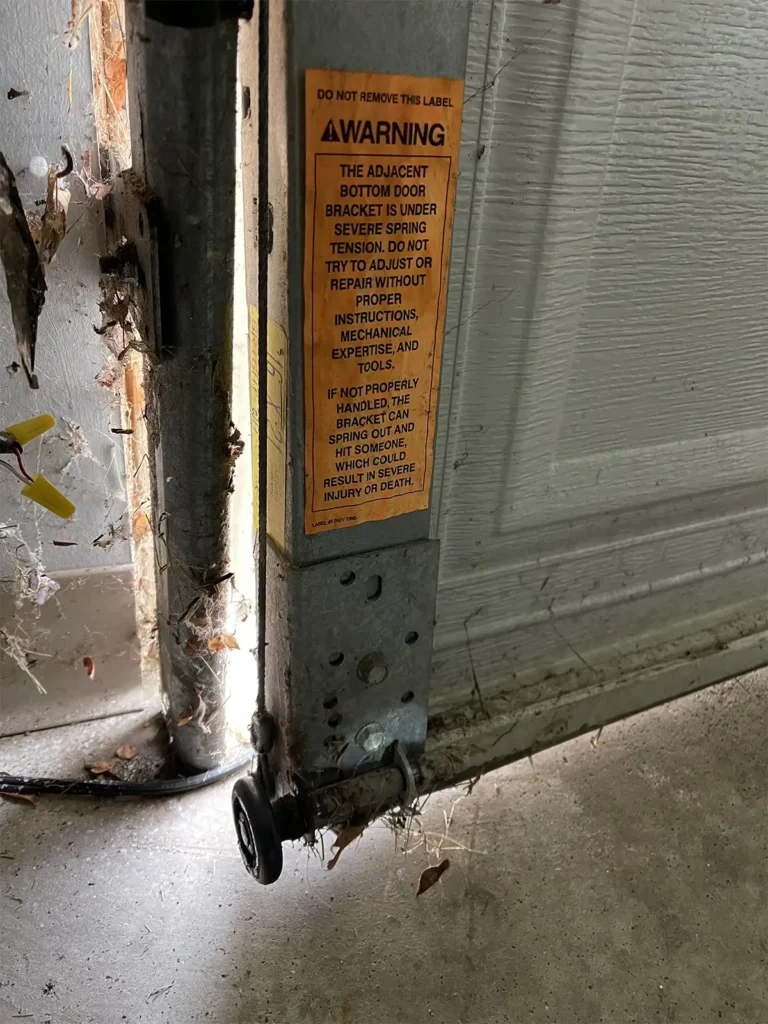
How to Safely Use the Emergency Release
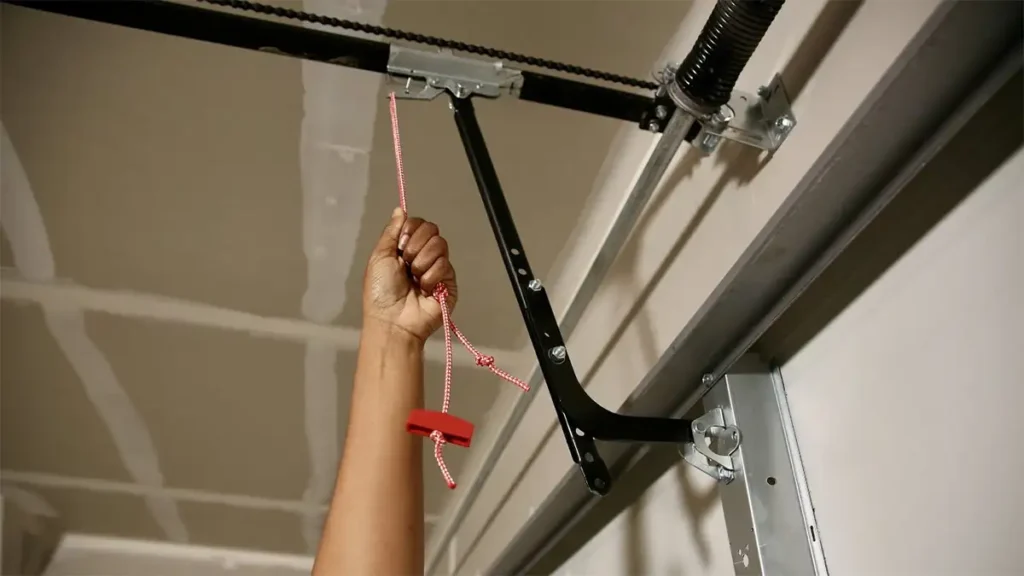
The emergency release is a red cord that hangs from the garage door opener. It’s designed for exactly this situation, allowing you to disengage the opener and move the door manually.
Step-by-Step Instructions
Step 1: Locate the Emergency Release Cord
Look for a red cord hanging from the opener mechanism. It’s usually within easy reach and clearly visible.
Step 2: Pull the Cord Firmly
Pull the cord straight down. You’ll hear a click as the opener disengages from the door. Afterwards the garage door should be able to move freely.
Step 3: Move the Door Manually
With the opener disengaged, you can now move the door by hand. However, be very careful. The door is still heavy and unstable.
Step 4: Secure the Door
Once you have the door where you want it, it’s important to secure it. Use clamps or locking pliers on the tracks to hold it in place. This prevents it from falling suddenly.
Step 5: Don’t Use the Door
Once you’ve released the door and moved it, don’t try to operate it normally. Leave the door secured and call a professional for the repair.
Important Safety Warnings
- Never stand under a door that’s off its tracks — it could fall at any time.
- If the door is too heavy to lift, don’t force it — call a professional.
- Don’t leave the door unsecured — it could fall and cause injury.
- If the door is jammed, don’t force it — you could make the problem worse.
Garage Door Off Track, When to Call a Professional
Realigning a garage door is a specialist job that requires the right tools, experience, and knowledge. Here’s why you should always call a professional.
Safety
Realigning a door involves working with heavy components, tensioned springs, and potentially sharp metal edges. A professional installer has the training and experience to do this safely.
Experience
A professional has seen it all before. They can quickly diagnose the problem and know exactly what needs to be done. This saves time and prevents further damage.
Right Tools
Realigning a door requires specialist tools, including winding bars, heavy-duty clamps, and track adjusters. Most homeowners don’t have these tools sitting in their garage.
Prevention
A professional won’t just fix the immediate problem. They’ll check the rest of the door, identify any underlying issues, and ensure the door is properly balanced and operating smoothly.
Guarantee
A professional will guarantee their work. If something goes wrong, you have someone to call back.
Preventing Future Problems
Once your door is fixed, there are steps you can take to prevent it from happening again.
Regular Maintenance
Check the tracks, rollers, and hardware every few months. Look for obvious signs of damage, wear or loose fittings. A little time spent on maintenance can prevent a lot of problems.
Keep the Tracks Clean
Dirt and debris can build up in the tracks, causing the rollers to stick. Wipe the tracks clean regularly.
Avoid Impacts
When parking your car it’s important to be careful near the garage door. Even a small bump can knock the door off its tracks.
Inspect the Rollers
Inspect the garage door rollers for signs of wear or damage. Worn garage door rollers can cause the door to derail off the tracks. Replace them before they fail.
Check the Hardware
Tighten any loose bolts and brackets. Loose hardware can cause the tracks to shift and the rollers to slip.
Garage Door Off Track Checklist
| Symptom | Action |
|---|---|
| Door off tracks | Do not use. Secure the area. |
| Door is unstable | Keep children and pets away. |
| Need access | Use emergency release carefully. |
| Door won’t move | Do not force it. Call a professional. |
| Door is stuck open or closed | Use emergency release to access garage. |
Final Garage Door Off Track Thoughts
If your garage door has come off its tracks it is a serious problem that requires professional attention. Attempting to fix this garage door issue yourself can be very dangerous and also could cause further damage.
If your door is off its tracks, it is important to not force anything as you could cause further damage. Keep the area clear, and if you need access, use the emergency release to manually move the door. Then call a professional to carry out the repair.
It’s a small investment that will give you peace of mind and ensure the safety of your family and property.