

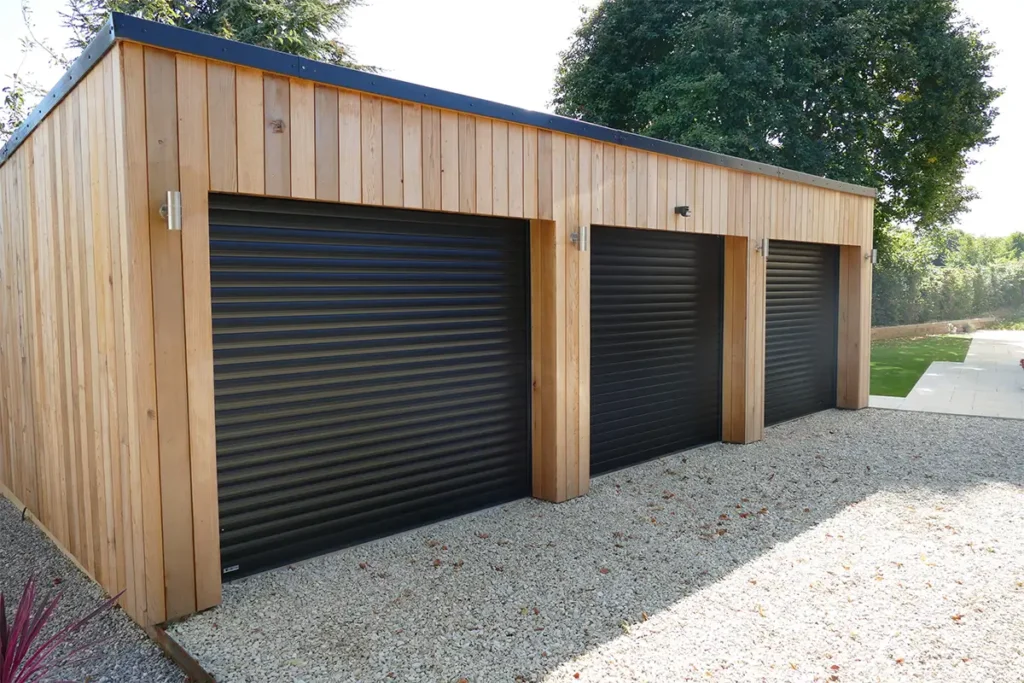
If you live in a modern home or have a short driveway, you’ve almost certainly considered a roller garage door. Unlike traditional up-and-over doors that swing outward, roller doors operate vertically, rolling up into a compact box above the garage opening. This space-saving design makes them an increasingly popular choice for UK homeowners.
However, roller doors aren’t the right fit for every property. They tend to cost more than up-and-over alternatives, and some cheaper models offer less security than a basic steel sectional door. For many homeowners, though, the benefits far outweigh the drawbacks.
This guide covers everything you need to know about roller garage doors. We’ll explore how they work, the benefits they offer, the materials available, average UK costs, and key installation considerations.
New to garage doors? Start with our complete guide to garage doors for everything you need to know.
How Roller Garage Doors Work
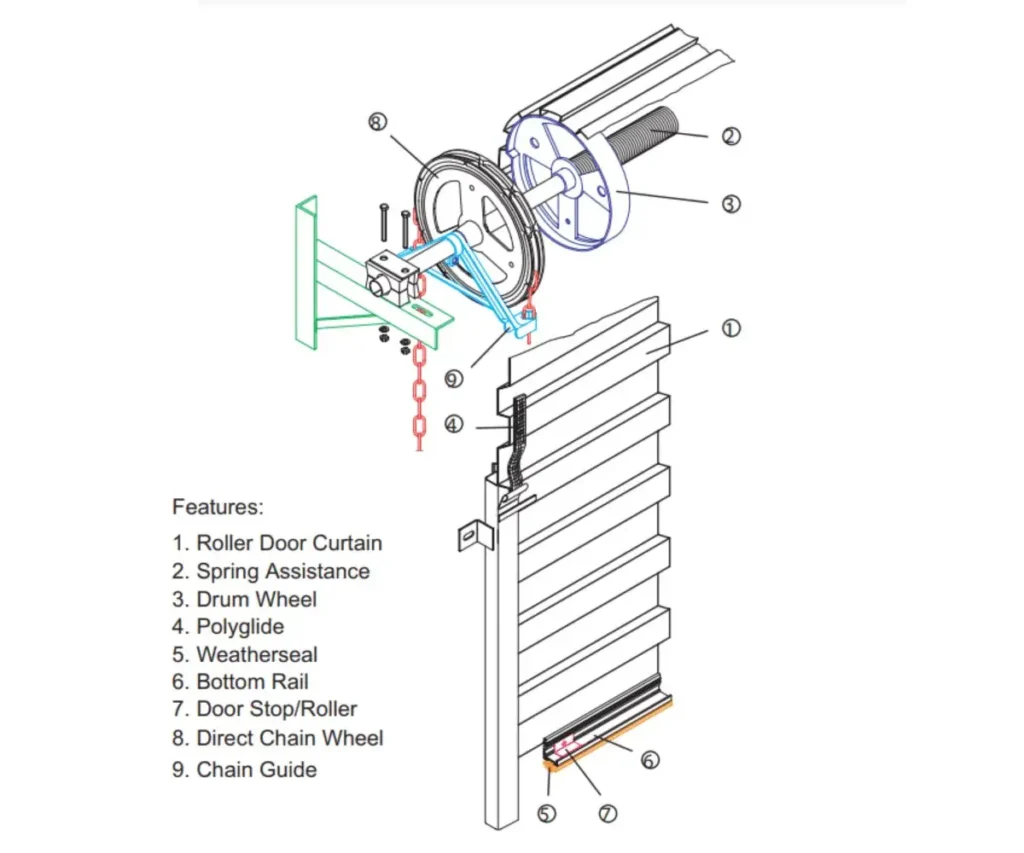
A roller garage door operates on a simple yet ingenious principle. The door consists of a series of horizontal slats—also known as a curtain—that roll up around a drum housed inside a box above the garage opening. When you press the button on your remote, the motor turns the drum, which pulls the curtain up and guides it into the box.
This means the door doesn’t swing outward at any point during operation. Consequently, you can park your car right up to the garage door without worrying about clearance. Furthermore, because the door rolls up into a box rather than sliding along ceiling tracks, roller doors take up very little internal space.
Most roller doors are electrically operated as standard, although manual options are still available for budget-conscious buyers. The motor is typically housed within the roller box, keeping it out of sight and protecting it from the elements.
Benefits of Roller Garage Doors
Roller garage doors offer several advantages over other garage door types. Here’s why they remain a popular choice for many UK homeowners.
Space-Saving Design
This is perhaps the biggest advantage of roller doors. As they roll up vertically, these types of garage doors don’t require any clearance in front of the garage. As a result, they’re ideal for homes with short driveways, narrow access, or where you need to park close to the door.
Furthermore, the door doesn’t take up any internal space once it’s open. There are no tracks protruding into the garage interior, which means you can use the full width and height of the opening for vehicles, storage, or a workshop.
Excellent Security
Roller doors offer strong security features as standard. The slats are typically made from aluminium or steel, and the curtain locks into the guides when closed, making it difficult to force open. Many modern roller doors also include automatic locking mechanisms that engage when the door is fully closed.
However, it’s worth noting that cheaper single-skin steel roller doors may not offer the same level of security as a basic sectional door. As a result, it’s important to choose a quality door from a reputable manufacturer.
Convenience and Automation
Most roller doors are electrically operated as standard, which means you can open and close them at the touch of a button from the comfort of your car. Many models also include smart features like smartphone control, remote monitoring, and integration with home automation systems.
Insulation and Energy Efficiency
Roller doors can be insulated, although the level of insulation depends on the construction. Double-skinned aluminium roller doors with foam insulation offer good thermal efficiency, helping to keep your garage warmer in winter and cooler in summer. Single-skin steel doors, on the other hand, offer very little insulation.
Aesthetic Appeal
Roller doors have a sleek, modern appearance that suits contemporary homes. They’re available in a wide range of colours and finishes, and the clean lines complement modern architecture perfectly.
Materials Available for Roller Garage Doors
Roller garage doors are available in several materials, each with its own advantages.
Aluminium Roller Doors
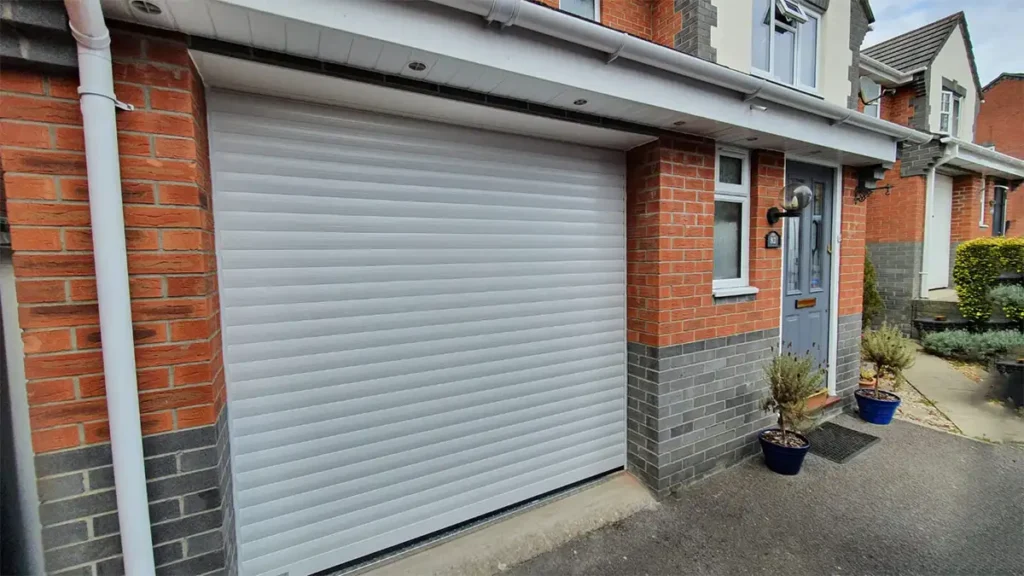
Aluminium is the most common material for roller doors. It’s lightweight, naturally resistant to corrosion, and available in a wide range of colours and finishes.
Pros: Lightweight; rust-resistant; low maintenance; sleek appearance; easy to operate.
Cons: Less durable than steel; can dent more easily; more expensive than some steel options.
Best for: Modern homes; coastal areas where rust is a concern; homeowners who prioritise aesthetics.
Steel Roller Doors
Steel roller doors are less common than aluminium but offer superior strength and durability. They’re typically available in single-skin construction or insulated double-skin options.
Pros: Strong and durable; secure; affordable for basic models; good insulation on double-skin options.
Cons: Heavier than aluminium; can rust if the coating is damaged; single-skin options offer poor insulation.
Best for: Security-conscious homeowners; budget-conscious buyers; those with heavy or commercial use.
GRP Roller Doors
GRP (Glass Reinforced Plastic) is less common for roller doors but offers excellent weather resistance and low maintenance.
Pros: Weather-resistant; low maintenance; won’t rot or corrode.
Cons: Limited availability; can be expensive; may fade over time.
Best for: Coastal areas; homeowners wanting a low-maintenance option.
Roller Garage Doors Style and Finish
Roller doors are available in a range of styles and finishes to suit different homes.
Colour Options
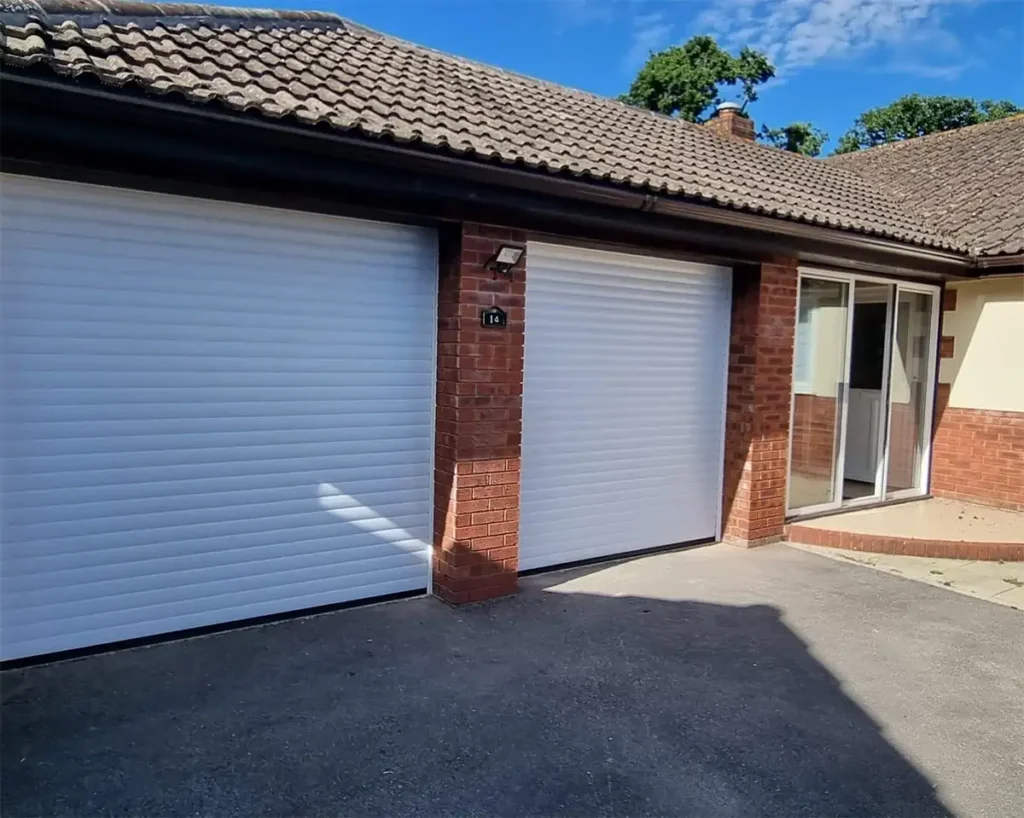
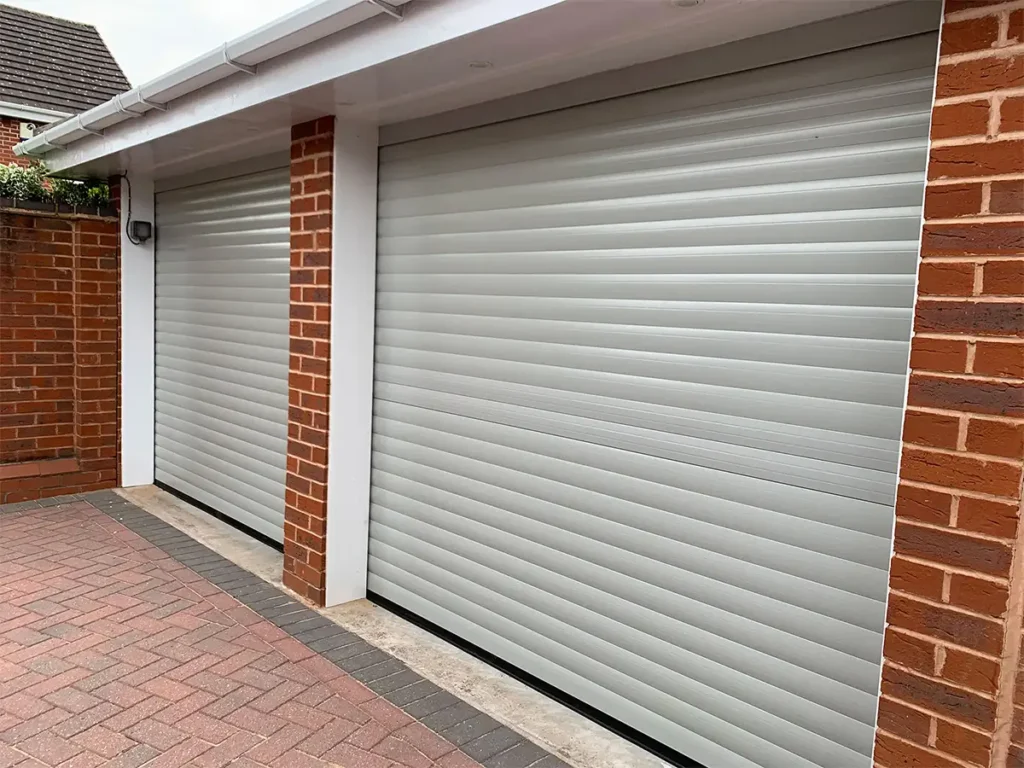
Roller doors are available in a wide range of colours, including white, cream, grey, anthracite, black, and custom colours. Most manufacturers offer a standard colour palette with the option to match specific RAL codes for an additional cost.
Finishes
- Smooth: A clean, contemporary finish that’s easy to clean and maintain.
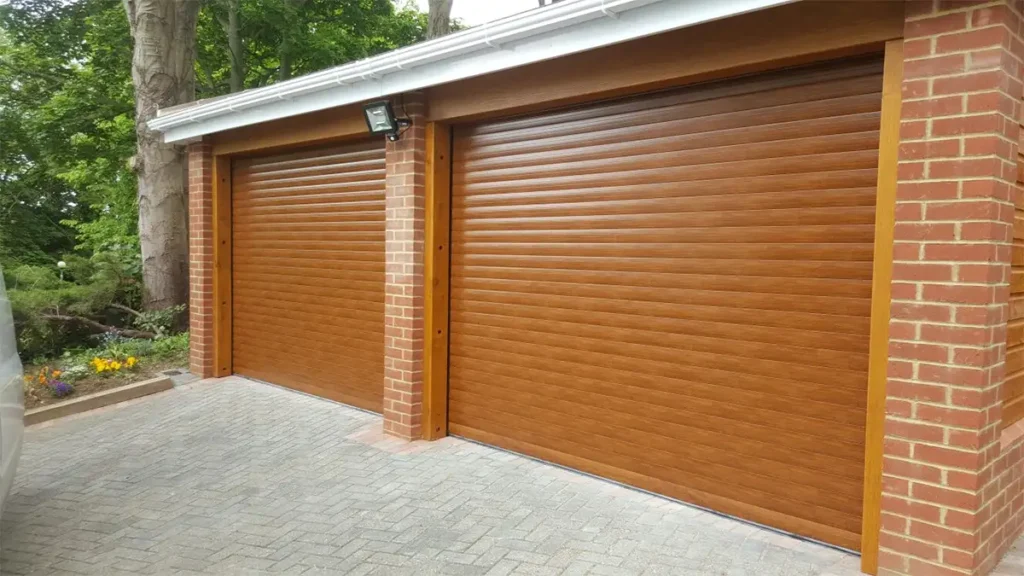
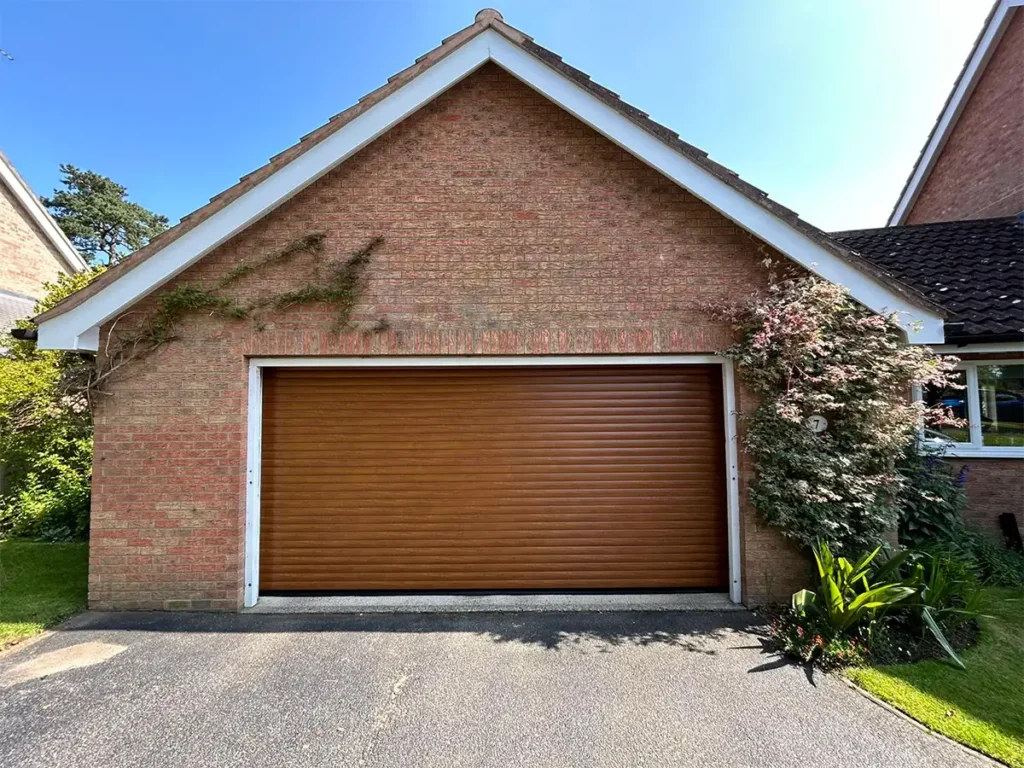
- Woodgrain: Realistic timber-effect finishes that mimic oak, cedar, and other hardwoods.
- Textured: A textured finish that adds visual interest and helps hide minor marks.
Glazing and Windows
Unlike sectional or up-and-over doors, roller doors typically don’t include windows. However, some manufacturers offer glazed options with integrated windows for natural light.
Average UK Costs of Roller Garage Doors
Roller doors are generally more expensive than up-and-over doors but offer better insulation and security. Here’s what you can expect to pay.
Door Costs
| Type | Approximate Cost (Door Only) |
|---|---|
| Basic single steel roller | £900 – £1,300 |
| Standard uninsulated aluminium roller | £1,200 – £1,700 |
| Insulated aluminium roller | £1,630 – £2,400 |
| Premium insulated double roller | £2,000 – £3,500+ |
Key Installation Considerations
Installing a roller door requires careful planning, particularly around space and measurements.
Headroom Requirements
Roller doors need sufficient headroom above the opening for the roller box. Typically, you need around 200-300mm of clearance above the lintel. Consequently, if you have limited headroom, a sectional door might be a better choice.
Side Room Requirements
You need around 100-150mm of clearance on each side of the opening for the guide runners. Make sure you have sufficient space before proceeding with installation.
Survey and Measurement
Professional installers will carry out a site survey to measure the opening accurately. This is crucial because roller doors are made to measure, and incorrect measurements can result in a door that doesn’t fit.
Automation
Most roller doors are electrically operated as standard. If you’re adding automation, you’ll need a power supply near the door. Many manufacturers offer smart openers with Wi-Fi connectivity and smartphone control.
Professional Installation
While DIY roller door kits are available, professional installation is recommended for most homeowners. A professional installer will ensure the door is fitted correctly, the safety features work properly, and the warranty remains valid. Furthermore, a professional installation typically takes just a few hours, whereas DIY could take a full weekend.
Pros and Cons of Roller Garage Doors
| Pros | Cons |
|---|---|
| Space-saving design, no swing-out | Higher upfront cost than up-and-over |
| Excellent security features | Some cheaper models lack insulation |
| Convenient electric operation | Limited internal ceiling space with roller box |
| Wide range of colours and finishes | Can be noisier than sectional doors |
| Low maintenance | Single-skin options offer poor insulation |
| Suitable for short driveways | Heavy doors can be difficult to operate manually |
Is a Roller Garage Door Right for Your Home?
The decision comes down to your space, budget, and priorities.
Choose Roller if:
- Your driveway is short or you need to park close to the door
- You want a low-maintenance, modern-looking door
- You value convenience and automation
- You have limited internal space and want maximum garage floor area
- You’re willing to invest in a quality, long-lasting door
Choose Another Type if:
- You’re on a tight budget (up-and-over doors are cheaper)
- You want excellent insulation (sectional doors are better)
- Security is your top priority (a quality sectional door offers better security)
- You have very limited headroom above the opening
Final Thoughts
A roller garage door offers a space-saving, secure, and convenient solution that suits modern homes, short driveways, and homeowners who value automation. The sleek appearance and low maintenance make them a popular choice for contemporary properties.
However, they’re not suitable for every home. If you have a tight budget, limited headroom, or need maximum insulation, a sectional or up-and-over door might be a better fit.
For those who can accommodate them, roller doors offer a blend of convenience, style, and practicality that few other door types can match. Whether you choose aluminium for rust-resistance, steel for strength, or a premium insulated model for energy efficiency, there’s a roller door to suit your home.