

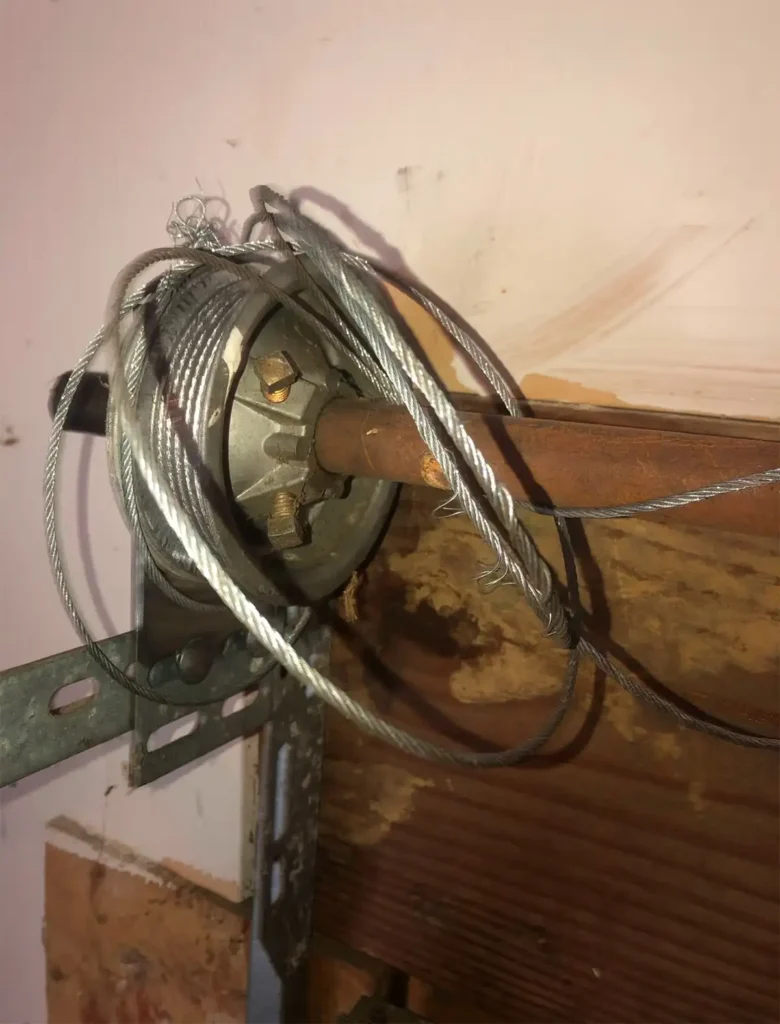
Your garage door cable might not be the most glamorous part of your door, but they’re one of the most important. Working alongside the springs, they counterbalance the weight of the door, making it possible to lift something that can weigh over 100kg with just one hand. Without the cables, your door simply wouldn’t work.
When a cable snaps or begins to fray, it’s a problem that needs immediate attention. However, it’s also one of the most dangerous DIY repairs you can attempt. The springs that work with the cables are under extreme tension, and mishandling them can cause serious injury.
This guide explains what the garage door cable does, the signs they’re failing, and most importantly, why this is a job best left to a professional. We’ll also cover what to expect in terms of cost and timing.
What Does a Garage Door Cable Do?
Your garage door cable play a critical role in the operation of your garage door. They connect the springs to the bottom of the door, transmitting the force needed to lift the door’s considerable weight.
How They Work
The system is surprisingly simple. The cables run from the bottom brackets on the door up to the spring mechanism at the top of the garage. When you open the door, the springs release tension, and the cables help guide the door up smoothly. When you close it, the springs tighten, and the cables lower the door back down.
The cables are under constant tension, which means they’re always working. Over time, this tension can cause them to wear, fray, or snap entirely.
What Happens When a Garage Door Cable Fails
If a cable snaps, the door becomes unbalanced. You may notice:
- The door won’t open or close properly
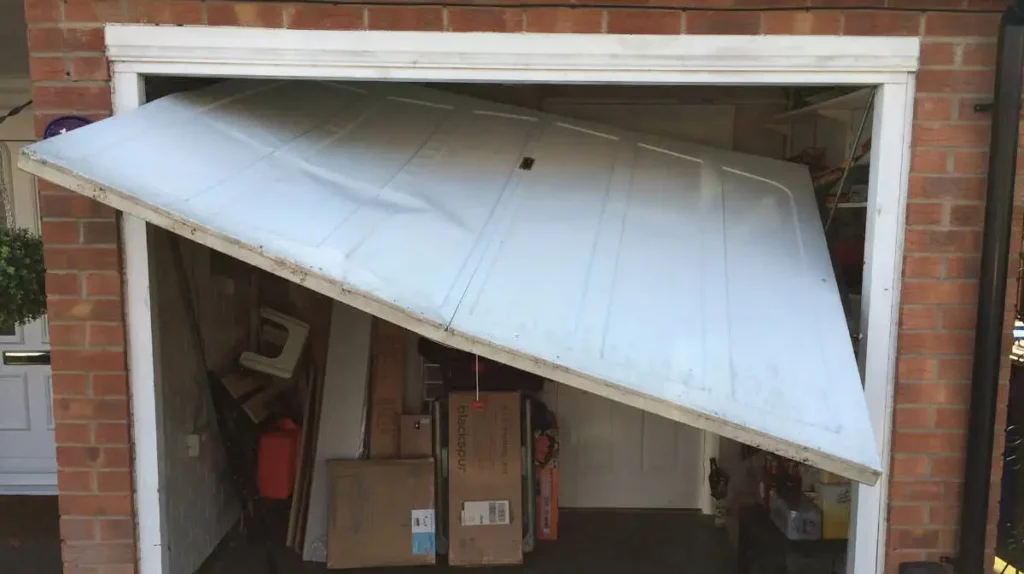
- The door opens at an angle
- The door slams shut when closing
- The door is difficult to lift manually
In the worst case, a broken cable can cause the door to fall suddenly, which is both dangerous and damaging to the door.
Signs Your Garage Door Cable Are Failing
Catching cable problems early can prevent more serious damage and keep you safe. Here are the signs to look out for.
Visual Signs
Fraying
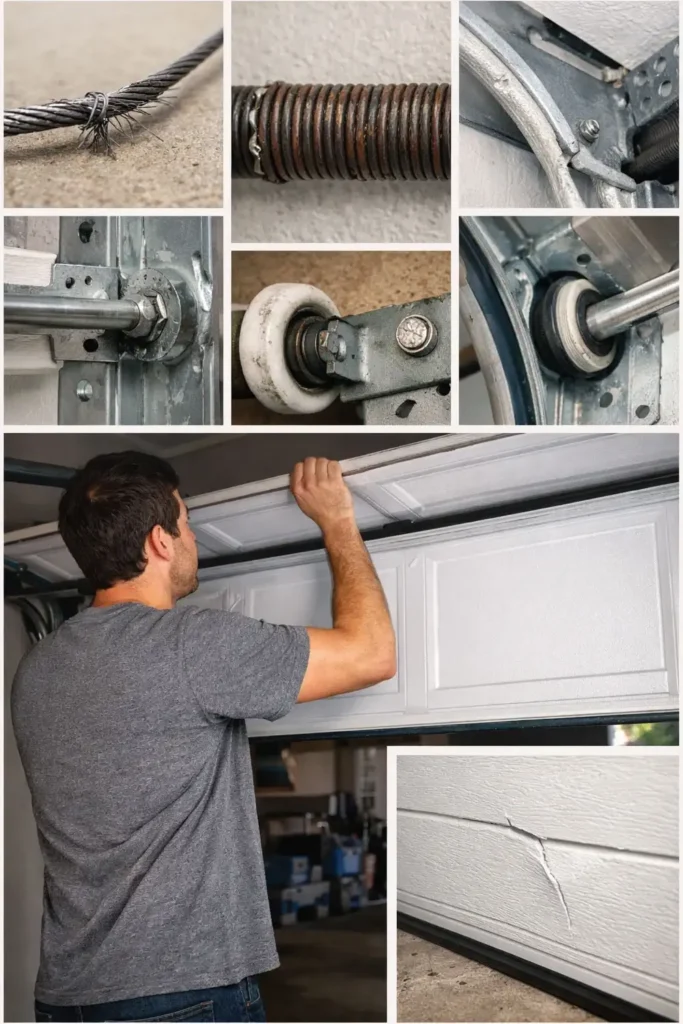
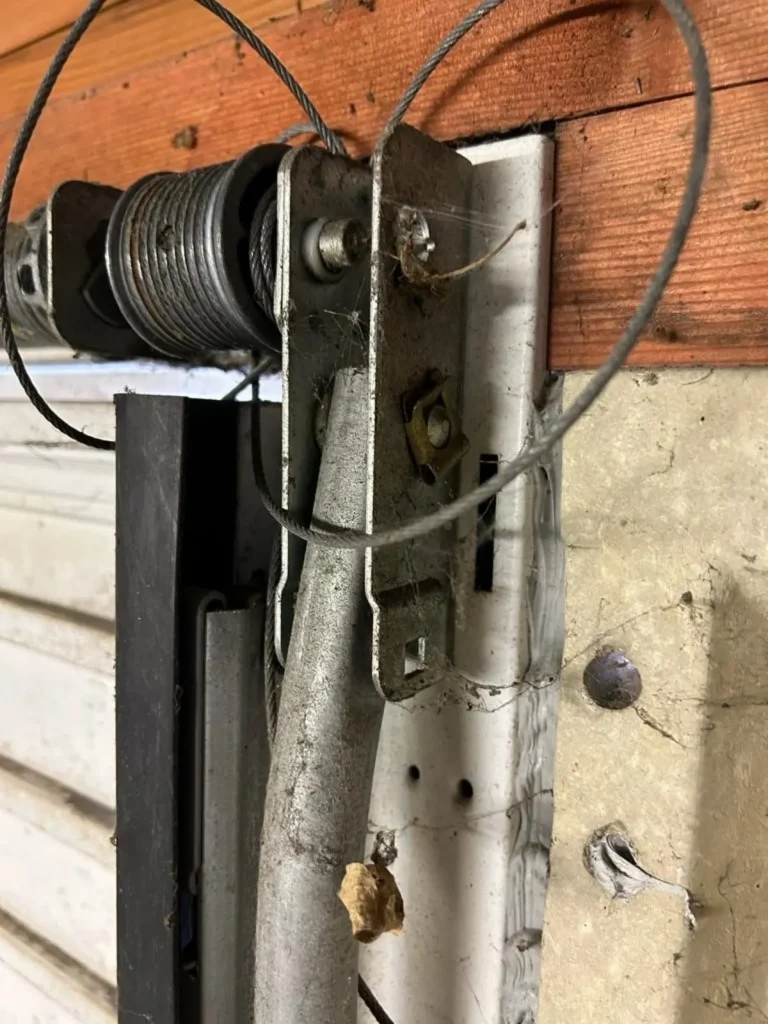
One of the most clear signs of cable wear is the metal wire fraying. The individual strands of wire that make up the cable can start to break, creating a frayed appearance. If you see wire fray like this, then the cable is getting weak and will eventually break.
Loose Coils
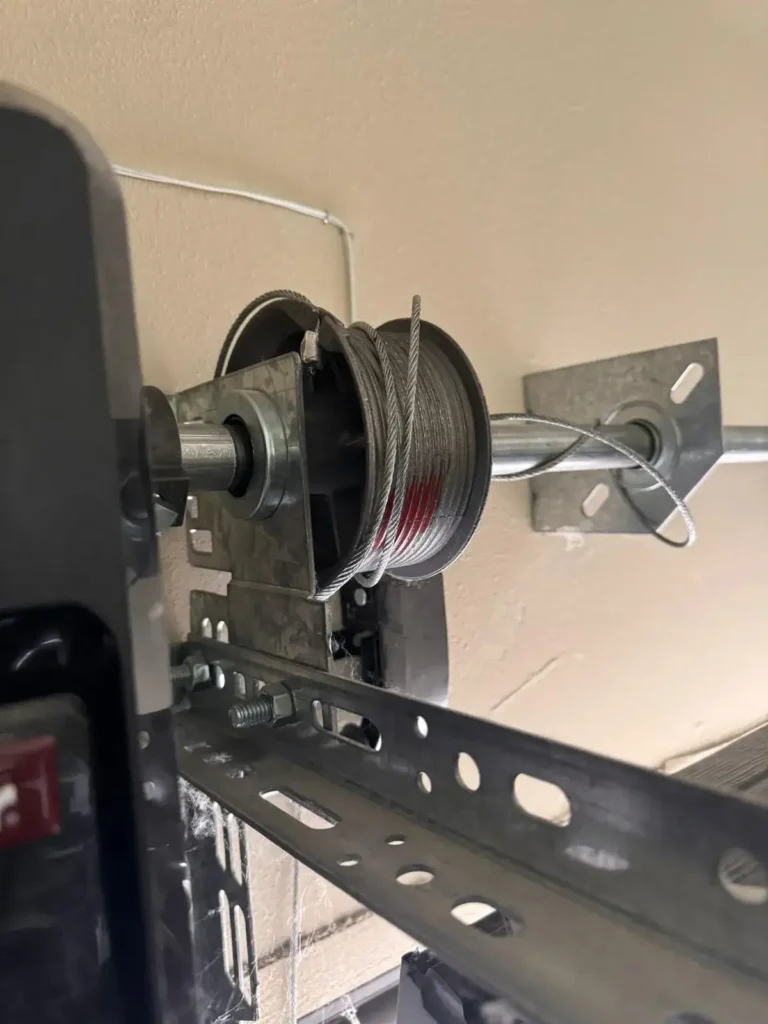
If you notice loose coils at the bottom of the cable drum, it’s a sign that the cable is slipping or has lost tension. This can be caused by wear or a problem with the spring mechanism.
Rust or Corrosion
Cables can rust, especially if they’re exposed to moisture or salt from winter roads. Rust weakens the cable and can cause it to snap unexpectedly.
Operational Signs
Door Opens Unevenly
If your door opens at an angle, it’s a clear sign that one cable is failing. The door is trying to lift itself on one side while the other side is struggling.
Door is Difficult to Lift
If the door feels heavier than usual, the cables may be losing tension. This puts extra strain on the opener and can lead to failure.
Unusual Noises
A snapping, popping, or grinding noise when the door operates can indicate cable problems.
Safety Warning
If you notice any of these signs, don’t ignore them. A snapped cable can cause serious injury or damage. However, do not attempt to fix it yourself. We’ll explain why below.
The Danger of DIY Garage Door Cable Replacement
A garage door cable are under extreme tension. Alongside the springs, they hold the entire weight of the door. Releasing that tension incorrectly can cause the cable to whip back with enough force to cause serious injury.
Here’s why you should always call a professional.
Extreme Spring Tension
The springs on a garage door are under enormous tension. When the tension is released to replace the cable you have to be careful, you’re dealing with a system that can release that energy suddenly and unpredictably. A cable under tension can snap back with enough force to break bones or cause permanent damage.

Specialised Tools Required
You can’t replace a garage door cable with standard hand tools. You need specialist tools designed to handle high-tension systems safely. A professional installer will have these tools and know how to use them correctly.
Experience Matters
A professional garage door installer has replaced hundreds of cables. They know how the system works, how to release tension safely, and how to set up the cables correctly. They also know what to do if something goes wrong.
Risk of Further Damage
Getting the cable replacement wrong can cause further damage to the door, the springs, or the opener. This can turn a relatively simple repair into an expensive one.
Guarantee and Insurance
A professional installer will guarantee their work. If something goes wrong, you’re covered. Plus, they have insurance in case of accidents.
What to Expect from a Professional Garage Door Cable Replacement
If you call a professional to replace your garage door cable, here’s what you can expect.
The Process
- Initial Assessment: The engineer will inspect the door and confirm the cables need replacing.
- Safe Tension Release: The engineer will safely release the tension from the springs, ensuring the system is safe to work on.
- Cable Removal: The old cables will be removed carefully.
- New Cable Installation: New cables will be fitted and correctly tensioned.
- Testing: The garage door will be tested properly to ensure it operates smoothly and safely.
- Adjustments: The engineer will make any final adjustments needed.
How Long Does It Take?
A professional cable replacement typically takes around 1-2 hours. This includes the initial inspection, the work itself, and the final testing.
How Much Does It Cost?
Cable replacement is generally one of the more affordable garage door repairs, making it a cost-effective way to restore safety and functionality to your door.
| Cost Element | Approximate Cost |
|---|---|
| Call-out fee | £30 – £70 |
| Labour (1-2 hours) | £50 – £100 |
| Cable replacement (parts) | £50 – £150 |
| Typical Total Cost | £100 – £300 |
The exact cost depends on:
- The type of door (up-and-over, roller, or sectional)
- Whether one or both cables need replacing
- Your location (prices tend to be higher in London and the South East)
- Whether you’re using an independent installer or a national company
Can You Just Replace One Garage Door Cable?
It’s generally recommended to replace both cables at the same time, even if only one is showing signs of wear. This is because:
- The other cable may be close to failing too
- New and old cables can have different tension levels, causing the door to operate unevenly
- Doing both at once saves you from having to pay for a second call-out later
A professional installer will usually recommend replacing both cables as a pair, which is the safest and most cost-effective approach.
FAQ: Garage Door Cable Replacement
Q: How often does a garage door cable need replacing?
A: With regular maintenance, cables can last 10-15 years. However, this depends on usage, environmental factors, and the quality of the cables. Fraying, rust, or signs of wear are signs they need replacing sooner.
Q: Can I tell if a cable is about to snap?
A: Visual signs like fraying, rust, or loose coils are clear warning signs. Regular visual inspections can help you spot these issues before they become serious. If you notice anything, don’t use the door and call a professional.
Q: Can I use the door if one cable is frayed?
A: No. A frayed cable is a serious safety risk. The door could fail at any time, which could cause injury or damage. Stop using the door immediately and call a professional.
Q: Will a broken cable damage my opener?
A: Yes. If a cable snaps, the door becomes unbalanced, which puts extra strain on the opener. This can cause the opener to burn out or the gears to strip. Replacing cables promptly can prevent more expensive repairs.
Q: Is it cheaper to replace cables yourself?
A: While you might save money upfront on labour, the risks are high. A DIY cable replacement can lead to serious injury or damage, which could cost much more than a professional repair. Most importantly, it’s not a risk worth taking.
Q: How do I find a reliable installer?
A: Look for a Checkatrade-approved garage door specialist with positive reviews. Ask for a fixed-price quote and check they offer a guarantee on their work. A good installer will also give you advice on maintaining your cables to extend their lifespan.
See our complete guide to garage doors for a full breakdown of types, costs, and maintenance.
Maintaining Your Garage Door Cable
Prevention is better than cure. Here’s how to extend the life of your garage door cables.
Regular Visual Inspections
Check your cables every few months. Look for signs of fraying, rust, or loose coils. If you spot anything, call a professional before the problem gets worse.
Keep the System Lubricated
A well-lubricated system puts less strain on the cables. Lubricate the springs, hinges, and rollers every six months with a silicone-based garage door lubricant.
Test the Door’s Balance
A balanced door puts even tension on both cables. Disengage the opener and lift the door halfway. It should stay in position. If it drops or rises, the springs need adjustment.
Don’t Ignore Small Issues
A small fray today can become a snap tomorrow. If you notice any wear, call a professional straight away. It’s cheaper to replace a cable than to repair a broken door or treat an injury.
Final Thoughts
Garage door cable replacement is one of the most dangerous DIY jobs you can attempt. The cables are under extreme tension, and releasing that tension incorrectly can cause serious injury. It’s simply not worth the risk.
If you notice signs of cable wear — fraying, rust, or loose coils — stop using the door and call a professional. A reputable garage door specialist can replace the cables quickly and safely, usually within a few hours and for a reasonable cost.
Regular maintenance and visual inspections can prevent most cable problems from developing in the first place. A little time spent checking your cables now can save you time, money, and worry later.