

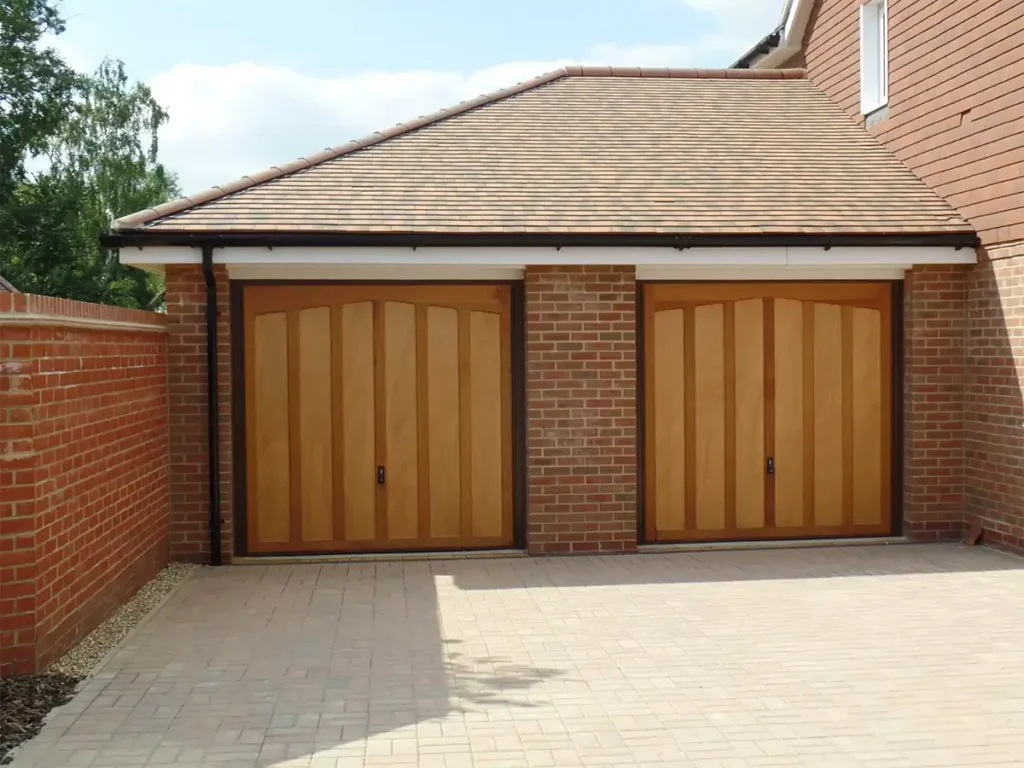
Choosing the right garage door material for your garage door is one of the most important decisions you’ll make. The material you choose affects everything from how long the door lasts to how much time you’ll spend maintaining it, how much you’ll pay, and how well it insulates your garage.
There are four main materials used for garage doors in the UK: steel, timber, GRP (Glass Reinforced Plastic), and aluminium. Each has its own strengths and weaknesses, and the right choice depends on your budget, your home’s style, and your personal priorities.
This guide compares all four materials, covering the pros and cons of each, durability, maintenance requirements, insulation properties, average UK costs, and which material suits different home styles and budgets.
Steel Garage Door Material
Steel is the most popular material for garage doors in the UK and for good reason. It offers a great balance of strength, affordability, and low maintenance.
Pros of Steel Garage Doors
Durability: Steel is incredibly strong and resistant to impacts. It won’t warp, crack, or rot like timber, making it a long-lasting choice.
Security: A steel door is difficult to force open or break through, making it one of the most secure options available.
Low Maintenance: Unlike timber, steel doesn’t require regular painting or treating. Most steel doors come with a factory-applied powder coat finish that resists chipping, peeling, and fading.
Affordability: Steel is one of the most affordable garage door material, with prices starting from around £500 for a basic up-and-over door.
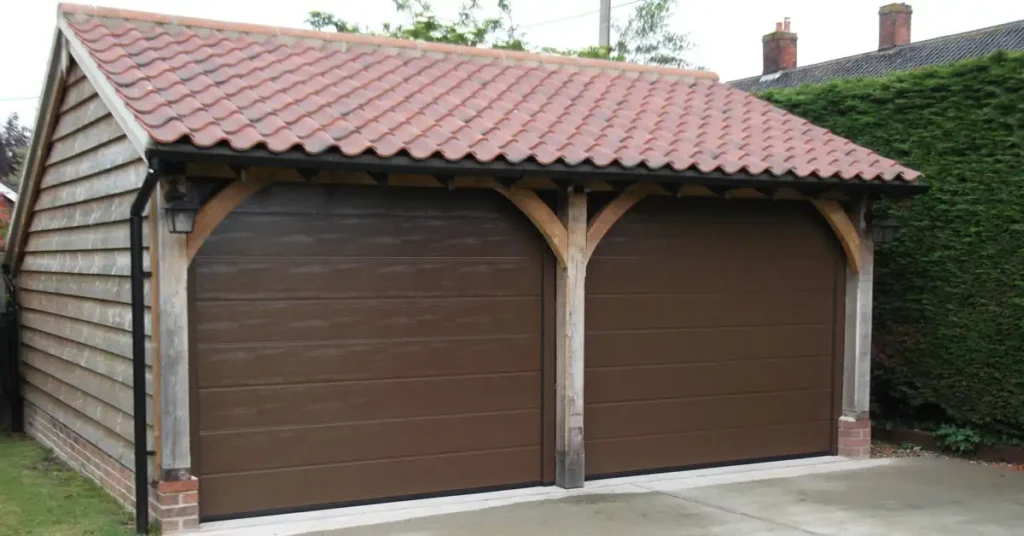
Versatility: Steel doors are available in a wide range of styles, colours, and finishes. You can get them to look like timber, with wood-grain textures that mimic the real thing.
Cons of Steel Garage Doors
Denting: Steel can dent if hit by a car or heavy object. While minor dents can sometimes be repaired, severe damage may require panel replacement.
Rust: If the protective coating is damaged, steel can rust. This is more of a concern in coastal areas or if the door is frequently exposed to moisture.
Less Insulation: Basic steel doors offer limited insulation. If energy efficiency is a priority, look for a door with a foam-filled or insulated core.
Average UK Costs
| Type | Approximate Cost |
|---|---|
| Basic steel up-and-over | £500 – £900 |
| Insulated steel up-and-over | £800 – £1,500 |
| Steel roller door | £900 – £2,000 |
| Steel sectional door | £1,200 – £2,500 |
Best For
Steel doors are a great all-round choice for most homeowners. They’re particularly well-suited to:
- Modern and contemporary homes
- Budget-conscious buyers
- Homeowners who want a low-maintenance option
- Areas where security is a priority
Timber Garage Door Material
Timber garage doors offer a warmth and character that no other material can match. They’re a popular choice for period properties, cottages, and homes where aesthetics are a priority.
Pros of Timber Garage Doors
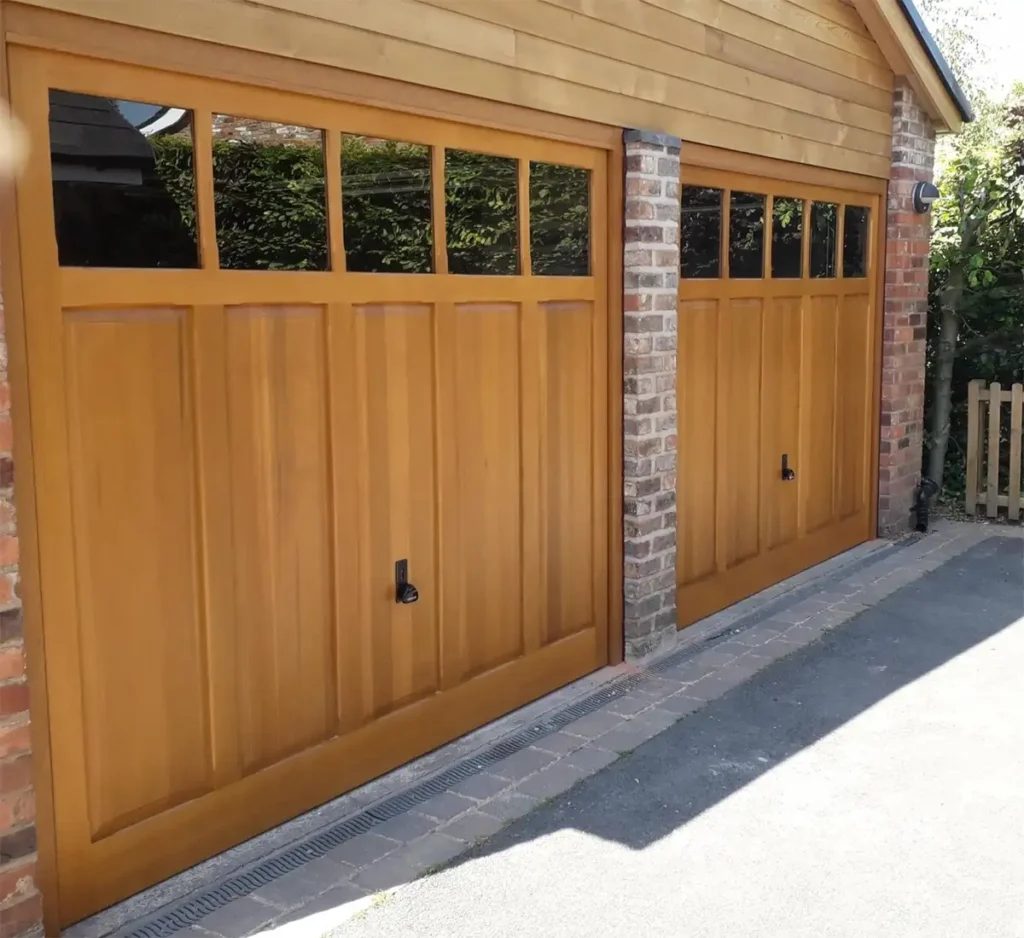
Aesthetics: Timber doors are beautiful. The natural grain, the warmth of the wood, and the ability to customise the finish make them a standout choice.
Bespoke Options: Timber doors can be made to measure and designed to match your home’s style. You can choose the wood type, finish, panel design, and even add decorative features.
Insulation: Timber is a natural insulator. Solid timber doors offer excellent thermal efficiency, keeping your garage warmer in winter and cooler in summer.
Repairability: Unlike steel or GRP, timber can be repaired relatively easily. Scratches and dents can be sanded out, and the door can be repainted or re-stained.
Cons of Timber Garage Doors
Maintenance: Timber requires regular maintenance. You’ll need to repaint or re-stain the door every 2-4 years to keep it protected from the elements.
Cost: Timber doors are among the most expensive options, with prices starting from around £1,500 for a basic door and rising significantly for bespoke designs.
Weather Sensitivity: Timber can warp, crack, or swell if not properly maintained. It’s also vulnerable to rot and insect damage in damp conditions.
Weight: Timber doors are heavy. This can make them more difficult to open manually and may require a more powerful opener if you’re adding automation.
Average UK Costs
| Type | Approximate Cost |
|---|---|
| Basic timber up-and-over | £1,500 – £2,500 |
| Bespoke timber door | £2,500 – £4,500+ |
| Timber side-hinged | £1,800 – £3,000 |
| Timber sectional | £2,000 – £4,000 |
Best For
Timber doors are ideal for:
- Period properties and cottages
- Homes where aesthetics are a priority
- Homeowners willing to invest time in maintenance
- Those looking for a bespoke, characterful door
GRP Garage Door Material (Glass Reinforced Plastic)
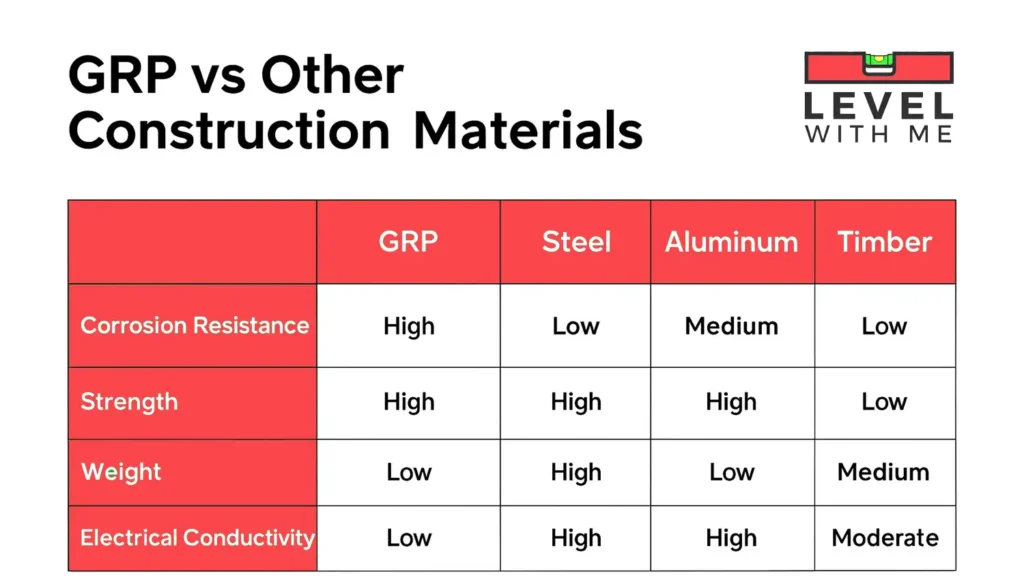
GRP (also known as fibreglass) is a composite material that offers the look of timber without the maintenance headaches. It’s becoming increasingly popular as homeowners look for low-maintenance alternatives to wood.
Pros of GRP Garage Doors
Low Maintenance: GRP doesn’t rot, warp, or rust. It doesn’t need painting or treating, and a simple wash with soapy water keeps it looking new.
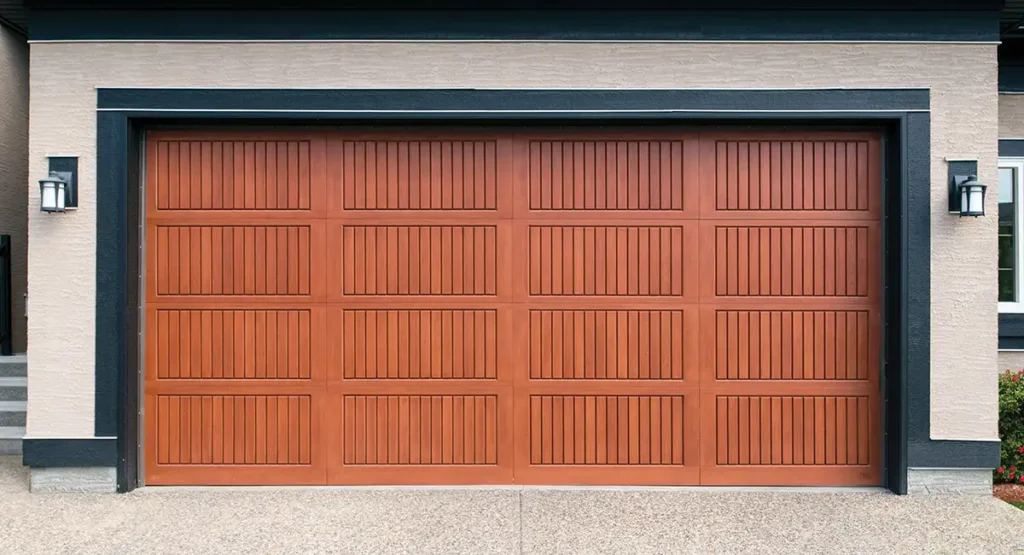
Timber Appearance: Many GRP doors are designed to look like timber, with realistic wood-grain textures and finishes.
Weather Resistance: GRP is highly resistant to moisture, UV rays, and temperature changes. It won’t fade, crack, or peel like painted steel can.
Lightweight: GRP is lighter than steel and timber, making it easier to operate manually.
Cons of GRP Garage Doors
Cost: GRP is more expensive than steel, typically priced between timber and aluminium.
Fading: While GRP is UV-resistant, some cheaper doors may fade over time if exposed to strong sunlight.
Limited Repairability: If a GRP panel is damaged, it’s difficult to repair. Replacement is usually the only option.
Less Customisation: While GRP doors come in a range of colours and wood-grain finishes, they don’t offer the same level of customisation as timber.
Average UK Costs
| Type | Approximate Cost |
|---|---|
| GRP up-and-over | £800 – £1,500 |
| GRP side-hinged | £1,000 – £2,000 |
| GRP sectional | £1,200 – £2,500 |
Best For
GRP doors are a great choice for:
- Homeowners who want the aesthetic of timber without the maintenance
- Coastal areas where salt and moisture can be an issue
- Budget-conscious buyers who can stretch to a mid-range price point
Aluminium Garage Door Material
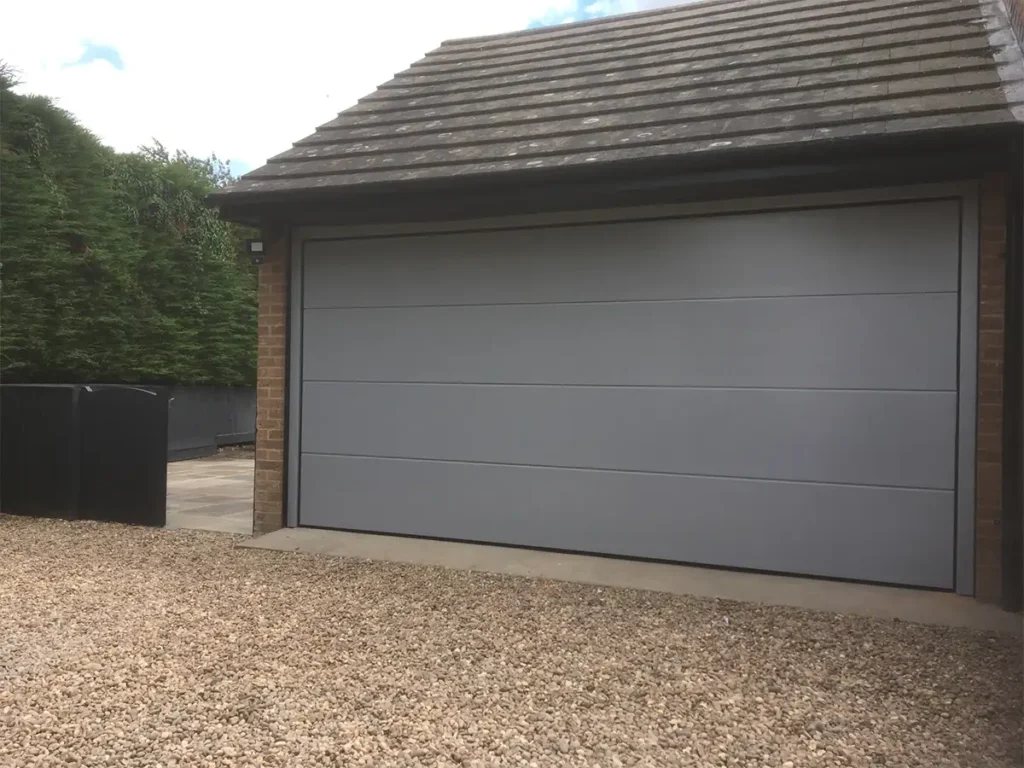
Aluminium is a lightweight, modern material that’s becoming increasingly popular, particularly for roller and sectional doors.
Pros of Aluminium Garage Doors
Lightweight: Aluminium is much lighter than steel, making it easier to operate and reducing strain on the opener.
Rust-Resistant: Unlike steel, aluminium doesn’t rust. This makes it a great choice for coastal areas or damp climates.
Modern Aesthetic: Aluminium doors have a sleek, contemporary look. They’re available in a range of colours and finishes, including anodised and powder-coated options.
Energy Efficient: Aluminium doors often include thermal breaks and insulation, making them more energy-efficient than basic steel options.
Customisable: Aluminium doors can be made to measure and are available in a wide range of styles and configurations.
Cons of Aluminium Garage Doors
Denting: Aluminium is softer than steel and can dent more easily, particularly in high-traffic areas.
Cost: Aluminium is more expensive than steel, typically starting from around £1,000.
Noise: Without proper insulation, aluminium doors can be noisier than steel or timber due to the material’s resonance.
Average UK Costs
| Type | Approximate Cost |
|---|---|
| Aluminium roller door | £1,000 – £2,000 |
| Aluminium sectional door | £1,200 – £2,500 |
| Aluminium up-and-over | £1,000 – £1,800 |
| Aluminium side-hinged | £1,200 – £2,200 |
Best For
Aluminium doors are ideal for:
- Modern and contemporary homes
- Coastal areas where rust is a concern
- Homeowners looking for a lightweight, easy-to-operate door
- Those seeking a sleek, modern aesthetic
Garage Door Material Comparison Table
| Feature | Steel | Timber | GRP | Aluminium |
|---|---|---|---|---|
| Durability | High | Medium | Medium-High | Medium |
| Maintenance | Low | High | Very Low | Low |
| Insulation | Medium (insulated) | High | Medium | Medium |
| Security | High | Medium | Medium-High | Medium |
| Weight | Heavy | Very Heavy | Light | Very Light |
| Cost | £500–£2,500 | £1,500–£4,500+ | £800–£2,500 | £1,000–£2,500 |
| Lifespan | 15-25 years | 20-30+ years | 20-30 years | 15-25 years |
| Style | Modern/Traditional | Traditional | Timber-look | Modern |
Which Garage Door Material Is Right for You?
The best material for your garage door depends on your priorities.
| Priority | Recommended Material |
|---|---|
| Low maintenance | GRP or Aluminium |
| Security | Steel |
| Aesthetics | Timber or GRP |
| Budget | Steel |
| Energy efficiency | Timber or Insulated Steel |
| Coastal areas | Aluminium or GRP |
| Modern homes | Aluminium or Steel |
| Period properties | Timber or GRP |
Final Garage Door Material Thoughts
Choosing the right garage door material is about balancing your budget, your home’s style, and your practical requirements.
- Steel is the most practical all-round choice for most homeowners, offering a great balance of durability, security, and affordability. If you’re on a tight budget, steel is hard to beat.
- Timber is the premium option, offering unmatched character and aesthetic appeal. But it comes at a cost both in upfront price and ongoing maintenance.
- GRP offers the best of both worlds, the look of timber with the low maintenance of a modern material. It’s a great choice if you want something that looks good without the upkeep.
- Aluminium is the modern choice, ideal for contemporary homes and coastal areas where rust is a concern.
Take the time to consider your priorities. Budget, maintenance, insulation, aesthetics, and location. Choose a material that fits your lifestyle. And remember, a well-chosen garage door is an investment that will add value to your home for years to come.
New to garage doors? Start with our complete guide to garage doors for everything you need to know.