

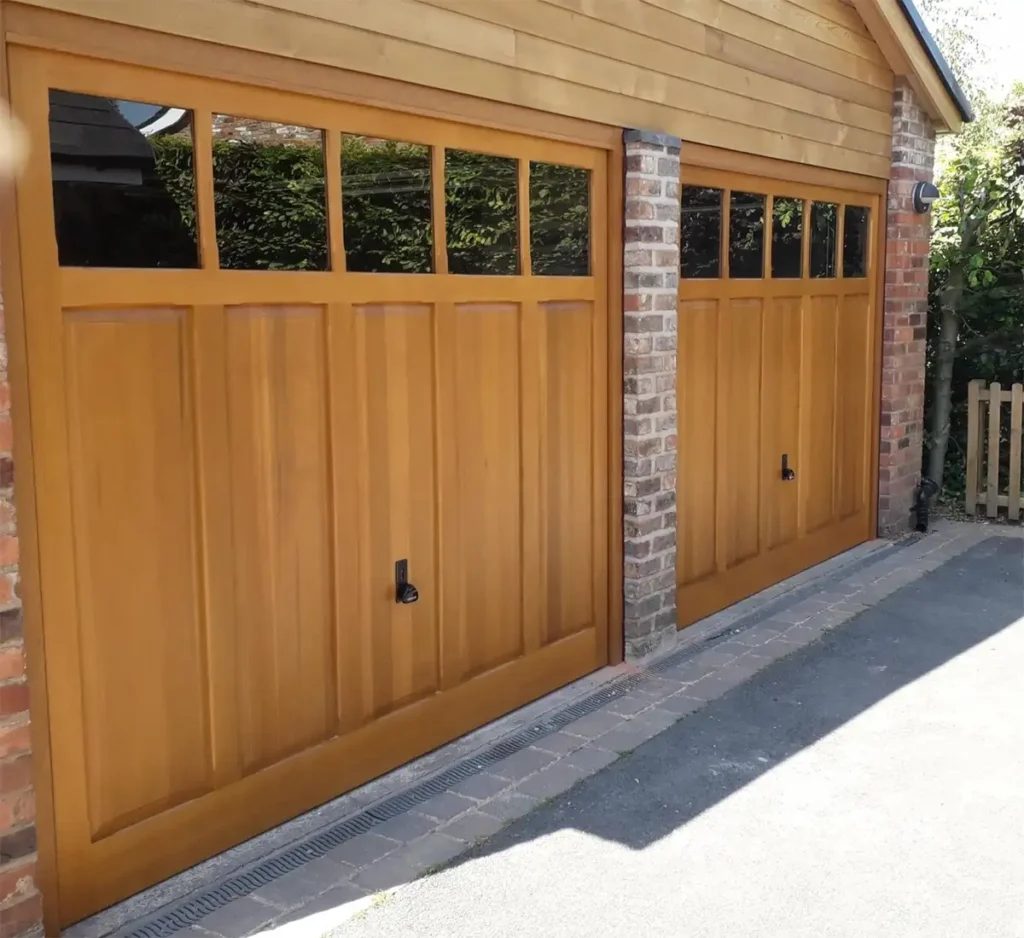
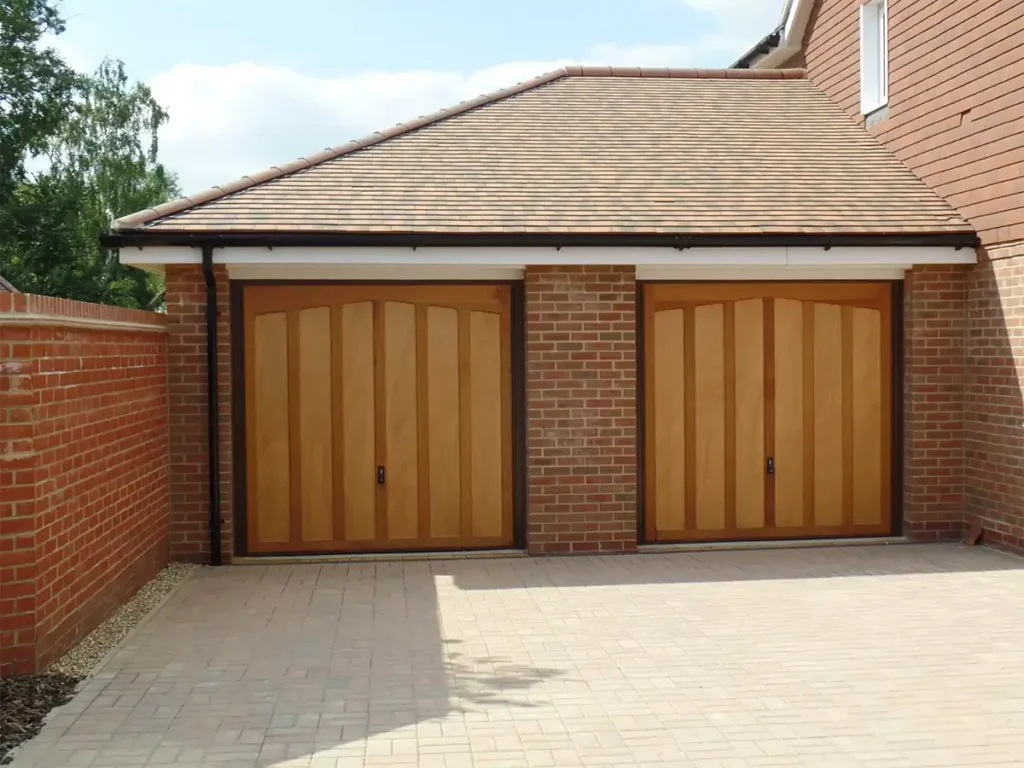
There’s something special about a timber garage door. The natural grain, the warmth of the wood, and the character it adds to a home are unmatched by any other material. For period properties, cottages, and homes where aesthetics are a priority, timber is often the material of choice.
However, timber doors come with their own set of considerations. They require more maintenance than steel or GRP, they’re heavier, and they cost more upfront. For many homeowners, though, the benefits far outweigh the drawbacks.
This guide covers everything you need to know about timber garage doors. The benefits, the types of wood available, maintenance requirements, average UK costs, and key considerations for installation and longevity. By the end, you’ll know whether a timber door is right for your home.
Why Choose a Timber Garage Door?
Timber garage doors offer a combination of natural beauty, insulation, and character that no other material can match. Here’s why they remain a popular choice for homeowners.
Natural Beauty
The grain, texture, and warmth of real wood are impossible to replicate. While steel and GRP doors can mimic the look of timber, they never quite capture the depth and character of the real thing. Consequently, a timber door adds personality to your home and creates a welcoming entrance.
Bespoke Designs
Furthermore, timber doors can be made to measure and designed to match your home’s style exactly. You can choose the wood type, finish, panel design, and even add decorative features like glazing or carved details. This level of customisation is rarely available with other materials.
Excellent Insulation
In addition, wood is a natural insulator. A solid timber door offers excellent thermal efficiency, keeping your garage warmer in winter and cooler in summer. As a result, this can help reduce energy costs and make your garage more comfortable to use.
Repairability
Unlike steel or GRP, timber can be repaired. Scratches, dents, and minor damage can be sanded out, and the door can be repainted or re-stained to restore its appearance. As a result, timber makes for a long-lasting investment.
Longevity
With proper maintenance, a well-made timber door can last 20-30 years or more. Moreover, many timber doors are built with traditional joinery techniques that have stood the test of time.
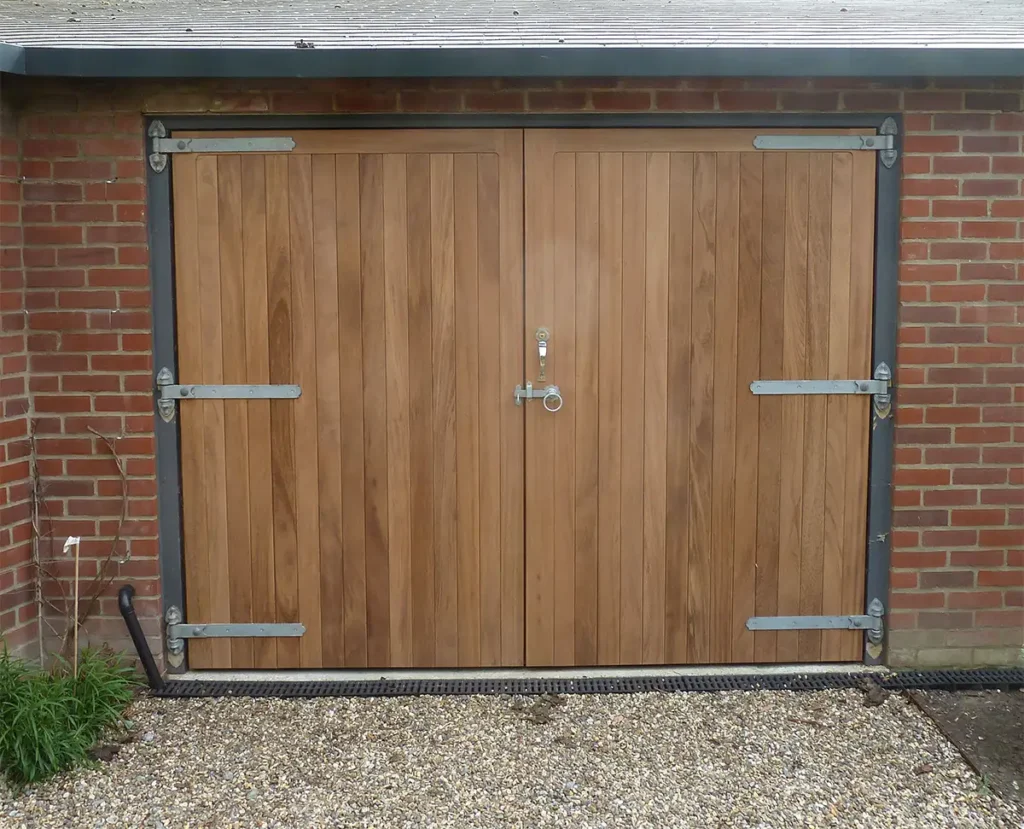
Types of Timber Used for Garage Doors
Not all timber is the same. The type of wood you choose affects the door’s appearance, durability, cost, and maintenance requirements.
Oak Timber Garage Door
Characteristics: Oak is a hardwood with a distinctive grain pattern. It’s strong, durable, and naturally resistant to decay. Over time, oak weathers to a beautiful silver-grey patina.
Pros: Exceptionally strong and durable; naturally resistant to insects and rot; develops a beautiful patina over time; available in a range of finishes.
Cons: Expensive; heavy; can be difficult to work with.
Best for: Period properties, listed buildings, and homes where authenticity is important.
Cedar Timber Garage Door
Characteristics: Cedar is a softwood known for its warm colour and distinctive aroma. It’s lighter than oak and naturally resistant to decay.
Pros: Naturally resistant to rot and insects; lightweight; warm colour; pleasant aroma; good insulator.
Cons: Softer than oak; can dent more easily; more expensive than some other softwoods.
Best for: Coastal areas, homes where weight is a concern, and homeowners who prefer a lighter colour.
Mahogany Timber Garage Door
Characteristics: Mahogany is a tropical hardwood with a rich, dark colour and straight grain. It’s durable, stable, and highly resistant to decay.
Pros: Beautiful, rich colour; excellent durability; highly resistant to rot and insects; stable and less prone to warping.
Cons: Expensive; increasingly rare; ethical sourcing is important.
Best for: High-end bespoke doors; homeowners who want a rich, dark finish; period properties.
Other Timber Garage Door Options
| Wood Type | Characteristics | Best For |
|---|---|---|
| Pine | Affordable, light colour, soft | Budget-conscious buyers |
| Meranti | Affordable, durable, dark colour | Cost-effective alternative to mahogany |
| Iroko | Very durable, weather-resistant, similar to teak | Coastal areas, high durability requirements |
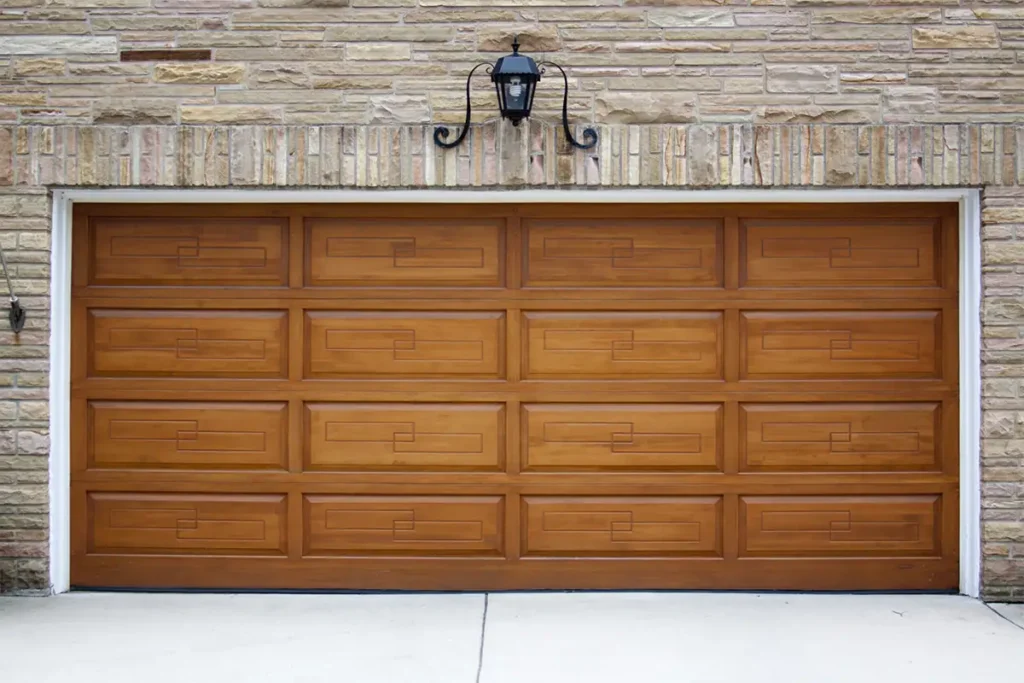
Timber Garage Door Styles
Timber doors are available in a range of styles to suit different homes.
Up-and-Over Timber Doors
The classic design. The door swings outward and then slides up into the garage ceiling. Available in timber, they offer a traditional look with reliable operation.
Side-Hinged Timber Doors
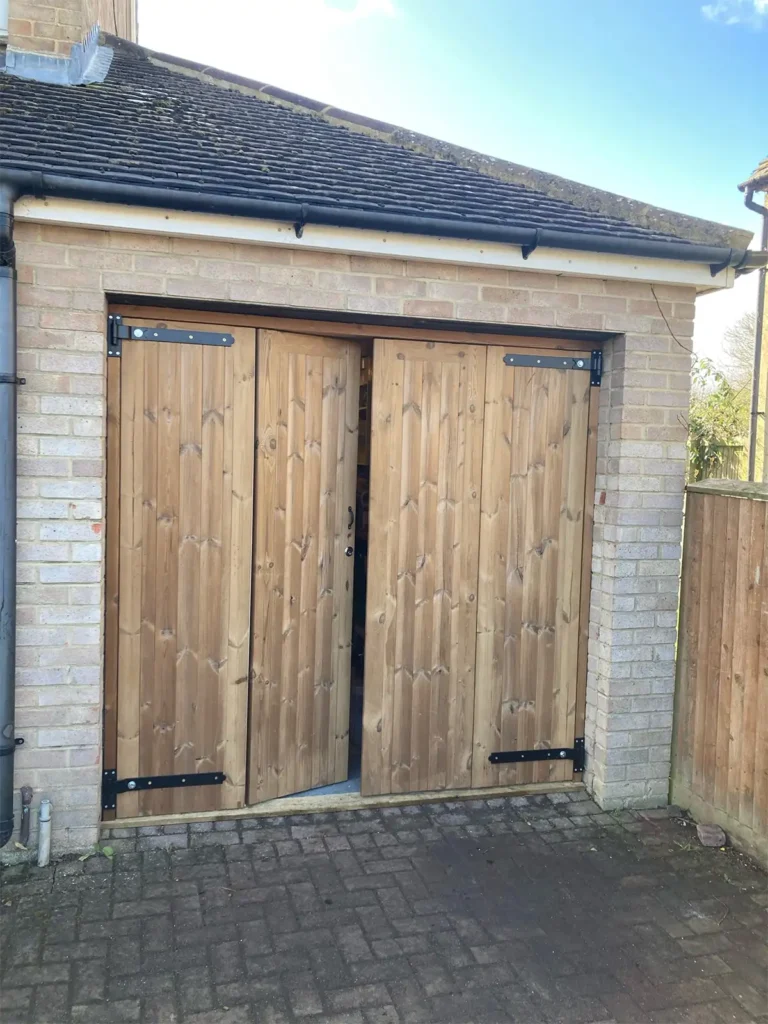
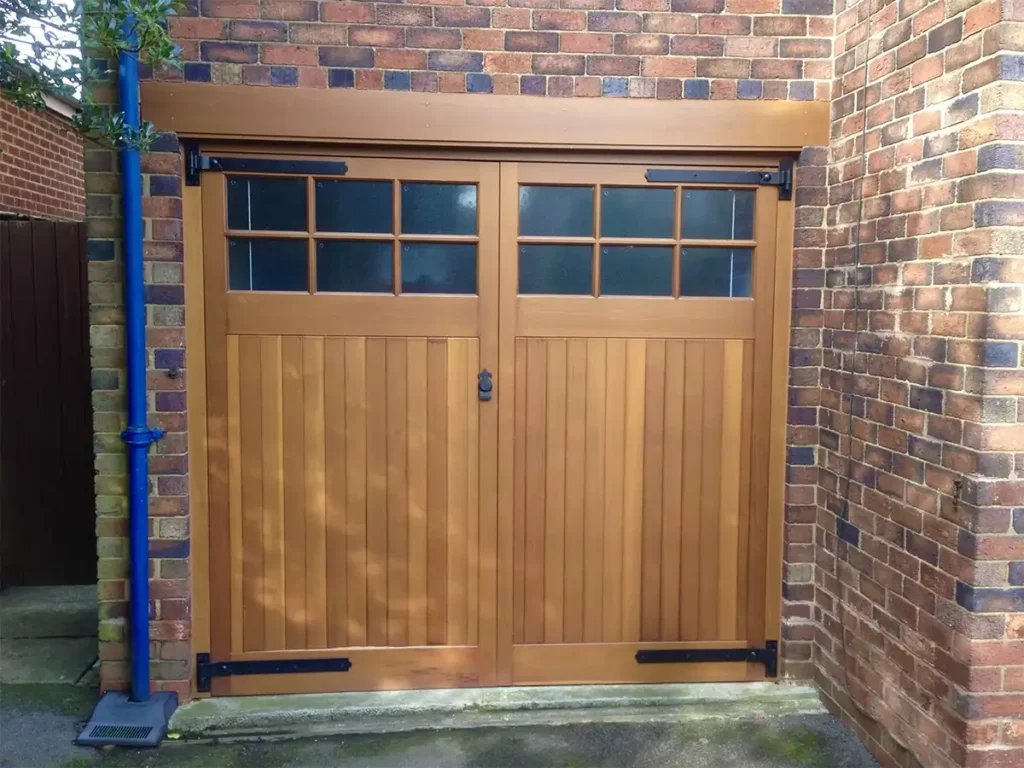
Side-hinged doors open outward like traditional double doors. They’re a popular choice for garages used as workshops or storage spaces, since they provide easy pedestrian access.
Sectional Timber Doors
Sectional doors are made of several horizontal panels that slide up and sit neatly under the ceiling. Timber sectional doors offer excellent insulation and a modern look with a traditional feel.
Bespoke Timber Doors
For homeowners who want something truly unique, bespoke timber doors can be designed to match your home’s style exactly. You can choose the wood type, finish, panel design, and add decorative features like glazing.
Maintenance Requirements
Timber demands more maintenance than steel or GRP. However, with the right care, a timber door can last decades. Even longer if you follow a maintenance schedule yourself.
Regular Painting or Staining
Timber doors need repainting or re-staining every 2-4 years to protect them from the elements. This is the single most important maintenance task.
How often: Every 2-4 years, depending on exposure and finish quality.
What to do: Sand down any flaking areas, apply a quality primer or wood treatment, and then repaint or re-stain.
Cleaning
You should clean your timber door regularly to remove dirt and debris. Use a soft cloth and mild detergent, and avoid abrasive cleaners that can damage the finish.
How often: Every 3-6 months.
What to do: Wipe down with a soft cloth and mild soapy water, then rinse with clean water.
Inspect for Damage
Check your door regularly for signs of damage: cracks, rot, insect infestation, or warping. Address any issues promptly to prevent them from getting worse.
How often: Every 6 months.
What to look for: Cracks, splits, rot, insect holes, warping, sticking, and gaps.
Treat and Protect
Apply a wood preservative or sealant to protect the door from moisture and UV damage. This is particularly important for doors exposed to direct sunlight or heavy rain.
How often: Every 2-3 years.
What to do: Apply a quality wood preservative or sealant following the manufacturer’s instructions.
Average UK Costs
Timber doors are among the most expensive garage door options. Here’s what you can expect to pay.
Timber Garage Door Costs
| Type | Approximate Cost (Door Only) |
|---|---|
| Basic timber up-and-over | £1,500 – £2,500 |
| Timber side-hinged | £1,800 – £3,000 |
| Timber sectional | £2,000 – £4,000 |
| Bespoke timber door | £2,500 – £4,500+ |
Installation Costs
Professional installation is strongly recommended for timber doors due to their weight and complexity.
| Service | Approximate Cost |
|---|---|
| Standard installation | £250 – £500 |
| Bespoke installation | £500 – £1000 |
| Removal and disposal of old door | £100 – £250 |
See our complete guide to garage doors for a full breakdown of types, costs, and maintenance.
Key Considerations for Installation
Installing a timber door requires careful planning and the right approach.
Weight
Timber doors are heavy. A solid timber up-and-over door can weigh over 100kg. For this reason, make sure your garage’s structure can support the weight, and consider a more powerful opener if you’re adding automation.
Frame Requirements
Timber doors require a sturdy frame. The frame must be square, level, and capable of supporting the door’s weight. In some cases, the frame may need to be reinforced.
Automation
If you’re adding automation, choose an opener with sufficient power to handle the door’s weight. A belt-drive or screw-drive opener is usually the best choice for heavy timber doors.
Weather Protection
Consider adding a canopy, overhang, or weatherproofing to protect the door from direct exposure to rain and sun. This can significantly extend the door’s lifespan.
Professional Installation
Because of their weight, complexity, and cost, timber doors should almost always be installed by a professional. A professional installer will ensure the door is fitted correctly, the safety features work properly, and the warranty remains valid.
Pros and Cons of a Timber Garage Door
| Pros | Cons |
|---|---|
| Natural beauty and character | High upfront cost |
| Excellent insulation | Regular maintenance required |
| Bespoke designs available | Heavy |
| Long lifespan with proper care | Can warp or rot if not maintained |
| Repairable | Susceptible to insect damage |
| Adds significant value to your home | Professional installation recommended |
Is a Timber Garage Door Right for Your Home?
The decision comes down to your priorities.
Choose Timber if:
- Aesthetics are a priority
- You have a period property or traditional home
- You’re willing to invest time and money in maintenance
- You want a bespoke, one-of-a-kind door
- You value natural materials
Choose Steel or GRP if:
- You’re on a tight budget
- You want a low-maintenance option
- Your garage is in a coastal area (consider GRP or aluminium)
- Security is your top priority (steel is stronger)
Final Timber Garage Door Conclusion
A timber garage door is an investment in your home’s character. It adds warmth, beauty, and value that few other materials can match. At the same time, it’s also a commitment. Timber requires regular care and attention, and it comes at a higher upfront cost.
If you’re willing to put in the work, a timber door will reward you with decades of beauty and performance. Choose the right wood for your needs, invest in quality craftsmanship, and commit to the maintenance schedule. A well-made timber door is not just a purchase, it’s an heirloom.
If you’re not sure whether timber is right for you, consider the alternatives. A high-quality GRP door can offer the look of timber with less maintenance, while steel offers superior security at a lower price. Whatever you choose, take the time to get it right. Your garage door is an investment in your home’s future.