

If your garage door refuses to close, or it stops and reverses for no apparent reason, the culprit is often a pair of small plastic boxes mounted on each side of the door, a few inches above the floor. These are your garage door safety sensors, and they’re one of the most important safety features in your home.
When they work properly, you never think about them. When they don’t, they can be a source of endless frustration. The good news is that most sensor issues are easy to fix yourself, and this guide will show you exactly how.
New to garage doors? Start with our complete guide to garage doors for everything you need to know.
What Are Garage Door Safety Sensors?
Garage door safety sensors are a critical safety feature designed to prevent the door from closing on people, pets, or objects. There are two main types of sensors used on garage doors: photoelectric sensors and magnetic sensors.
Photoelectric Sensors
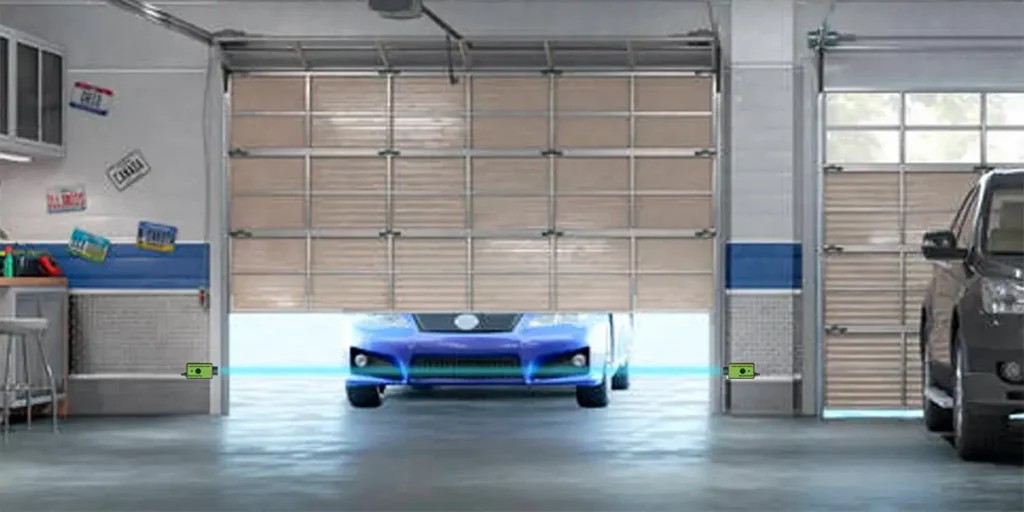
Photoelectric sensors are the most common type. They work by projecting an invisible infrared beam across the garage door opening. One sensor sends the infrared beam, and the other receives it. If anything breaks that beam while the door is closing, the system triggers an instant stop and sends the door back up.
These sensors are typically mounted on the tracks on each side of the door, about 15-20cm above the floor. They have small LED indicator lights that show whether they’re working correctly.
Magnetic Sensors
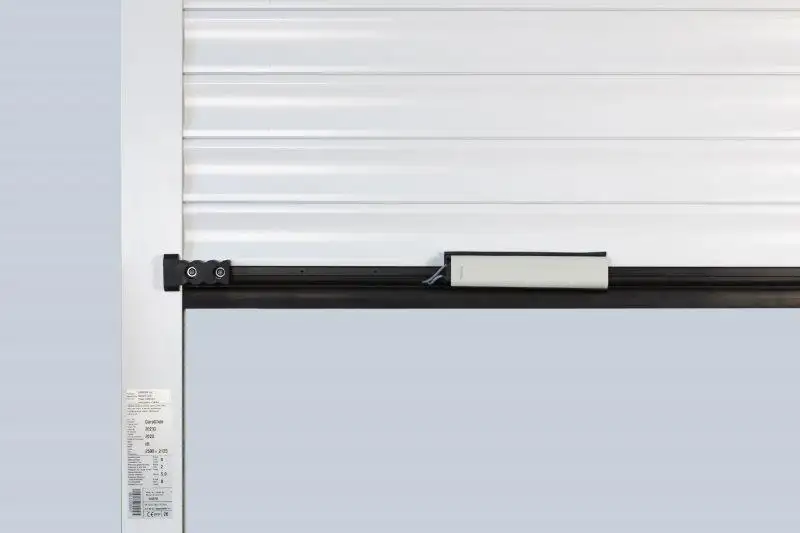
Some garage doors use magnetic sensors instead of photoelectric sensors. These systems rely on magnets placed along the door curtain or panels, which are detected by sensors connected to the control panel.
As the door moves up or down, the control panel constantly monitors the movement of the magnets. If the door encounters an obstruction and stops moving, the control panel detects this interruption and triggers a safety stop, reversing the door’s direction.
Magnetic sensors are often found on roller doors and some sectional door models. They don’t have the visible LED lights that photoelectric sensors do, which can make troubleshooting slightly different.
Regardless of which system your door uses, the principle is the same: the sensors are there to protect you and your family.
Why Garage Door Safety Sensors Stop Working
Safety sensors are reliable, but they’re not invincible. Here are the most common reasons they stop working.
Dirty Lenses (Photoelectric Sensors)
The sensors project and receive an infrared beam through small lenses. Over time, these lenses can become coated in dust, cobwebs, or grime. A dirty lens can block the beam, making the sensors think something is in the way.
This is the most common cause of sensor issues and the easiest to fix.
Misalignment (Photoelectric Sensors)
The sensors need to be pointing directly at each other to work properly. If one gets knocked out of alignment, the beam won’t reach the other sensor. The door will refuse to close.
Loose or Damaged Wiring
Both types of sensors are connected to the opener by thin wires. Over time, these wires can become loose or damaged, interrupting the signal.
Sunlight Interference (Photoelectric Sensors)
Bright, direct sunlight can sometimes overpower the infrared beam. This is more common in the summer months when the sun is low in the sky. If your sensors work fine at night but fail during the day, sunlight is likely the culprit.
Magnet Issues (Magnetic Sensors)
On magnetic sensor systems, the magnets themselves can become loose, dislodged, or damaged. If a magnet is missing or out of position, the control panel won’t detect the door’s movement correctly and may trigger a false obstruction alert.
Faulty Sensors
Occasionally, sensors themselves can fail. However, this is rare and usually happens after many years of use or after a lightning strike or power surge.
How to Tell If Your Garage Door Safety Sensors Are Working
Photoelectric Sensors
Most photoelectric sensors have small LED indicator lights.
- Solid LED: Both sensors are properly aligned and working correctly.
- Flickering LED: The sensors are misaligned or there’s an obstruction.
- No LED: There’s a power or wiring issue.
The colour of the LEDs varies by manufacturer, but one sensor typically has a green light and the other an amber or red light.
Magnetic Sensors
Magnetic sensors don’t usually have visible LED indicators. Instead, you’ll typically see a status light on the control panel or opener unit. If the door stops and reverses unexpectedly, the control panel may flash a specific error code. Consult your door’s manual for the meaning of different flash patterns.
If the door operates normally but you suspect an issue, the safest way to test is with an obstruction test as described below.
Step-by-Step Cleaning Guide (Photoelectric Sensors)
Cleaning your garage door sensors is a quick and simple task that takes less than five minutes. Here’s how to do it.
What You’ll Need
- A soft, dry cloth (a microfiber cloth is ideal)
- A mild glass cleaner (optional, for stubborn dirt)
The Process
1. Locate the Sensors
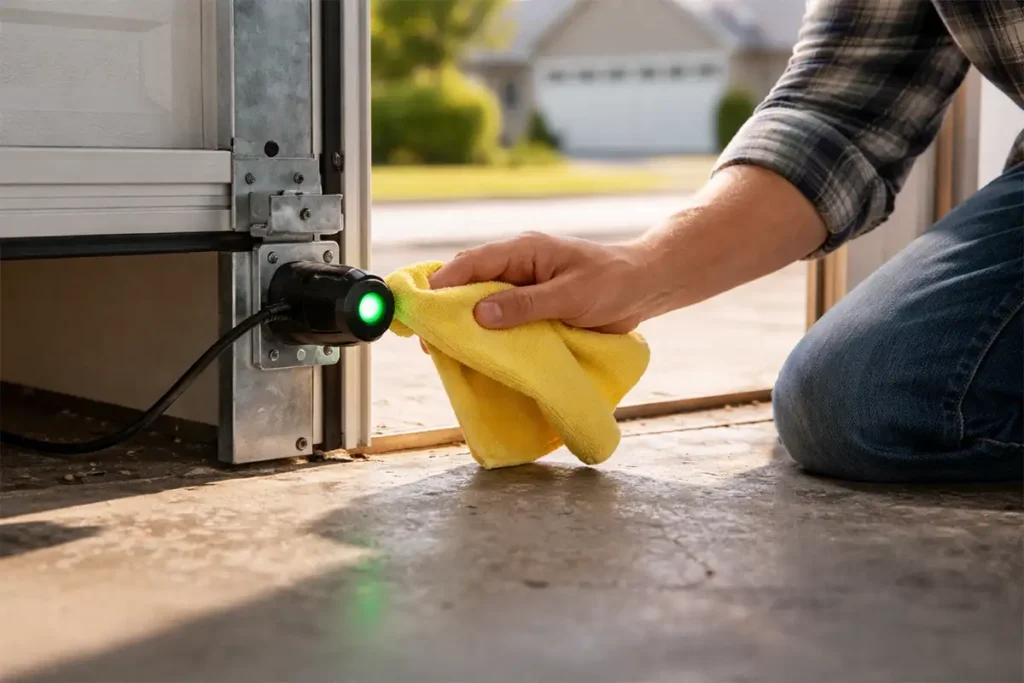
The sensors are mounted on the tracks on each side of the garage door, about 15-20cm above the floor. They look like small plastic boxes with a glass lens on the front.
2. Check the Lenses
Look at the lenses of both sensors. Are they dirty? Can you see dust, cobwebs, or grime? If so, they need cleaning.
3. Wipe the Lenses
Wipe the lenses gently with a soft, dry cloth. For stubborn marks, you can lightly dampen the cloth with a mild glass cleaner, but make sure the cloth is barely damp — you don’t want liquid running into the sensor.
4. Inspect the Wiring
While you’re there, check the wiring connecting the sensors to the opener. Is it damaged or loose? If it’s loose, secure it. If it’s damaged, you’ll need to call a professional.
5. Test the Door
Press the button to close the door. If it closes without reversing, you’re done. If not, move on to the alignment guide below.
Step-by-Step Alignment Guide (Photoelectric Sensors)
If a gentle clean doesn’t solve the problem, the sensors are likely misaligned. Here’s how to fix it.
What You’ll Need
- A spirit level (optional but helpful)
- A soft cloth (for cleaning while you align)
The Process
1. Check the Alignment
Stand behind one sensor and look directly at the other. They should be pointing straight at each other. If one is angled up, down, or to the side, it’s misaligned.
2. Loosen the Sensor
Use a screwdriver to slightly loosen the bracket that holds the sensor in place. You only need to loosen it enough to adjust the angle — don’t remove it entirely.
3. Align the Sensors
Gently adjust the sensor so it’s pointing directly at the other sensor. You’ll know you’ve hit the sweet spot when the LED on both sensors stops flickering and turns solid.
4. Use a Spirit Level for Precision
For the best results, use a spirit level to ensure both sensors are at exactly the same height.
5. Tighten the Bracket
Once both sensors are properly aligned and the LEDs are solid, tighten the bracket to secure the sensor in place.
6. Test the Door
Press the button to close the door. If it closes cleanly, you’ve fixed the problem.
Troubleshooting Common Issues with Garage Door Safety Sensors
If cleaning and alignment didn’t work, here are a few other things to check.
The Door Works Fine at Night But Not During the Day
This is a clear sign of sunlight interference. The sun is overpowering the infrared beam. You can try:
- Shading the sensor with a small piece of cardboard or a sunshield
- Adjusting the angle of the sensor slightly so it’s less exposed
- Moving the sensor to a slightly different position (though this is a bigger job)
The Door Closes, Then Immediately Reverses
This is often caused by a partial obstruction. Check that nothing is blocking the beam, even partially. Dust, cobwebs, or even a spider web can cause this.
The Door Only Closes When You Hold the Button
If you have to hold the wall button down to close the door, your sensors are likely misaligned or obstructed. The bypass function is a safety feature that shouldn’t be used regularly.
One Sensor Has No LED
If one sensor has no LED light at all, there’s likely a power or wiring issue. Check that the sensor is properly connected to the opener. If it is, you may need to call a professional.
The Door Operates Normally But Safety Tests Fail
If the door opens and closes but doesn’t reverse when obstructed, the sensors may be bypassed or faulty. This is a serious safety risk. Test the door with a cardboard box as described above. If it doesn’t reverse, call a professional immediately.
The Obstruction Test
This is the most important test you can perform. It confirms whether your sensors are actually protecting you.
What to do:
- Close the garage door completely
- Place a cardboard box or rolled-up towel in the path of the closing door
- Press the button to close the door
- If the sensor is working correctly it will stop and reverse immediately when it touches the object
If your door doesn’t reverse, the sensors are not working correctly. Try cleaning and aligning them first. If that doesn’t work, call a professional.
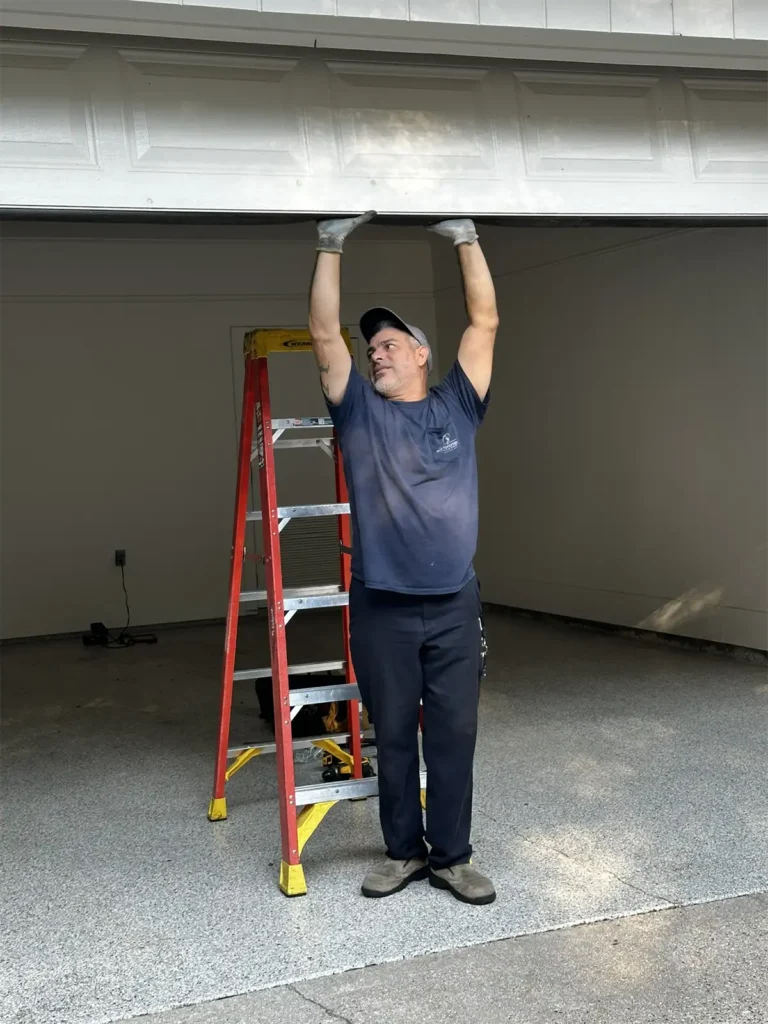
When to Call a Professional
While most sensor issues are DIY-friendly, there are times when you should call a professional.
- You’ve tried cleaning and aligning, and the problem persists
- There’s visible damage to the sensors or wiring
- The sensors work but the door still closes erratically
- You’re not comfortable working with electrical components
- Your door uses magnetic sensors and you suspect a fault with the magnets or control board
- The obstruction test fails consistently
A professional can diagnose the issue quickly and get your door working safely again.
Preventing Future Issues with Garage Door Safety Sensors
Once your sensors are working again, here’s how to keep them that way.
- Check the sensors visually every few months — a quick glance can catch a build-up of dust or cobwebs before they become a problem.
- Keep the area clear — avoid stacking items near the sensors where they could be knocked out of alignment.
- Clean the lenses every few months — a quick wipe-down takes seconds and prevents build-up.
- Test the obstruction function monthly — a quick test with a cardboard box confirms everything is working correctly.
Garage Door Safety Sensors Conclusion
Most garage door sensor issues are easy to fix. A quick clean or a simple alignment is often all it takes to get your door working properly again.
Regular maintenance — checking the sensors and wiping the lenses — can prevent most problems from developing in the first place. And if you do run into trouble, the steps above should get you back up and running.
If you’re ever unsure or the problem persists, don’t hesitate to call a professional.