

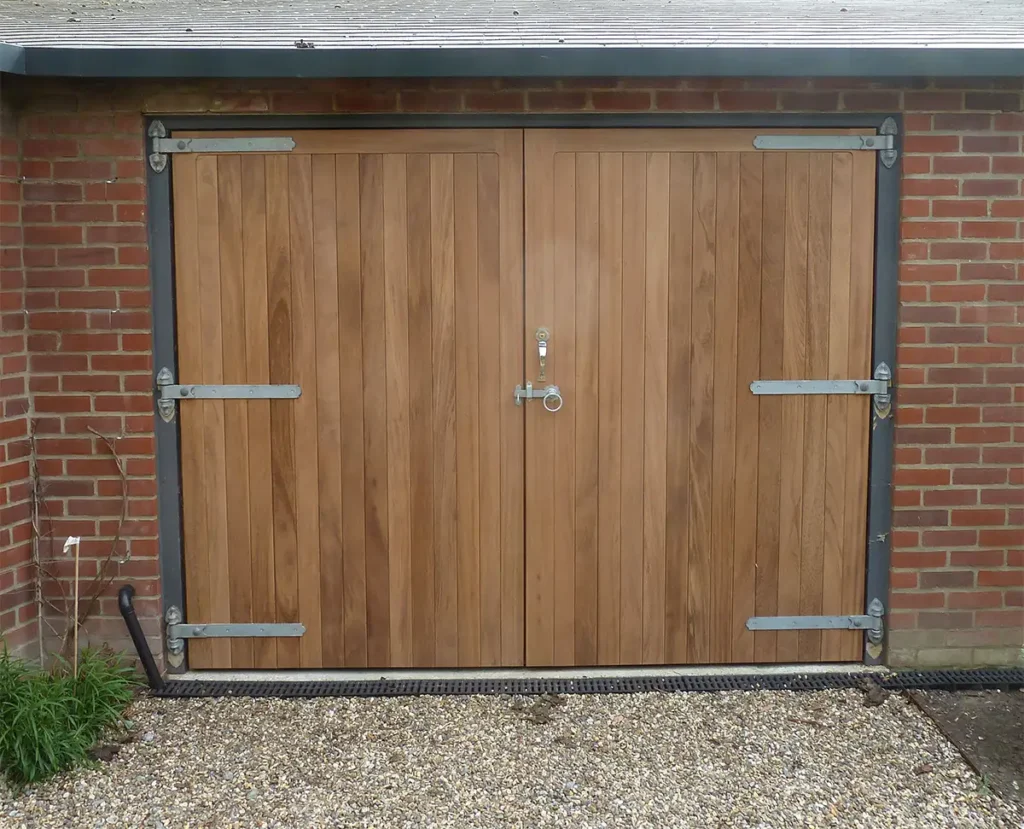
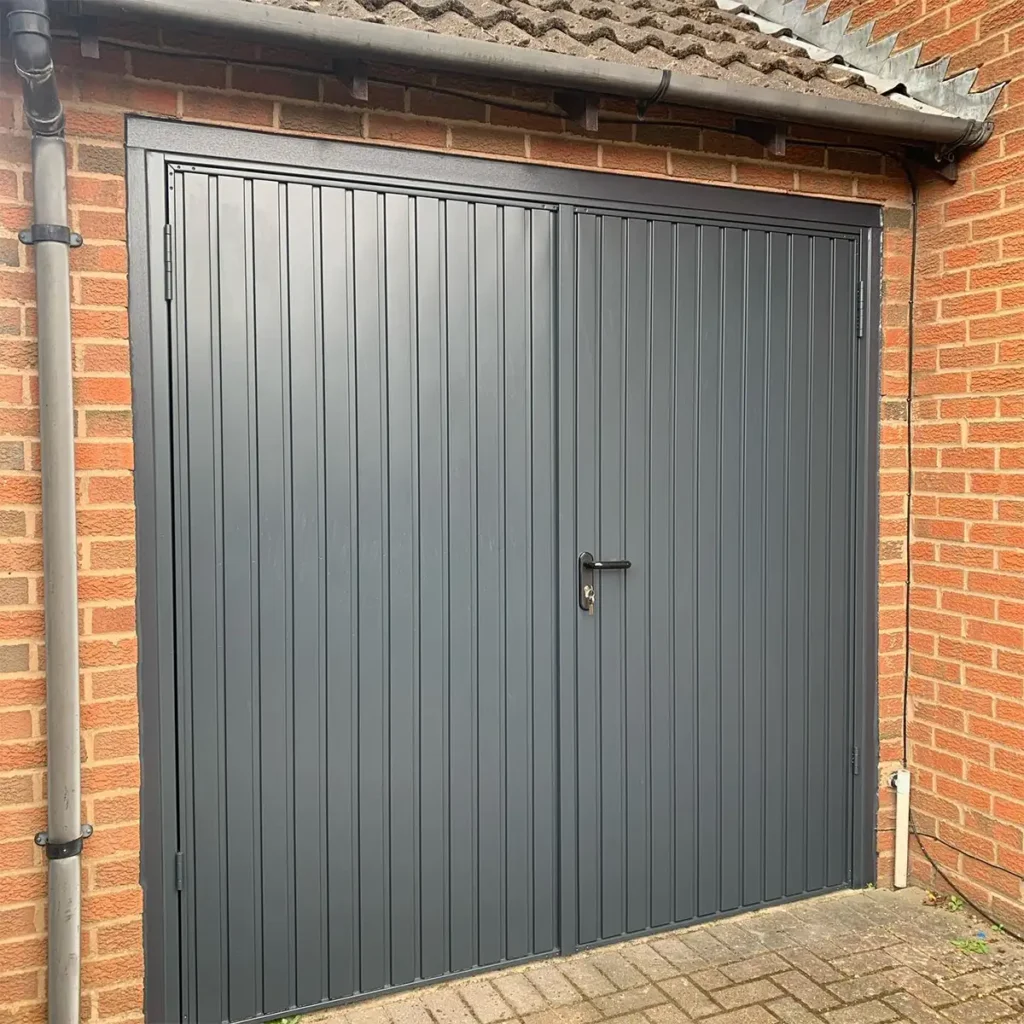
There’s something charming about a side-hinged garage door. Unlike a roller or up-and-over door, side-hinged doors open outward like traditional double doors. They offer easy pedestrian access, a classic aesthetic, and a level of character that suits period homes, workshops, and traditional properties perfectly.
However, side-hinged doors aren’t the right choice for every home. They require clearance to swing outward, and they may not be the most secure option compared to steel alternatives.
This guide covers everything you need to know about side hinged garage doors. We’ll explore how they work, the benefits they offer, the materials available, average UK costs, and key installation considerations. By the end, you’ll know whether a side-hinged door is right for your home.
New to garage doors? Start with our complete guide to garage doors for everything you need to know.
How a Side-Hinged Garage Door Works
A side hinged garage door operates on a simple and reliable mechanism. Hinges attach the doors to the door frame, just like a standard external door. When you open them, they swing outward, away from the garage opening.
Most side-hinged doors feature a pair of doors that meet in the centre, although single-leaf options are also available for narrower openings. You can operate them manually, or you can fit them with automation for added convenience.
This straightforward design makes them one of the easiest garage door types to operate. There are no springs, cables, or complex mechanisms to worry about. Moreover, they provide full access to the garage opening without any obstruction overhead.
Benefits of a Side-Hinged Garage Door
Side-hinged doors offer several advantages over other garage door types. Here’s why they remain a popular choice for many homeowners.
Easy Pedestrian Access
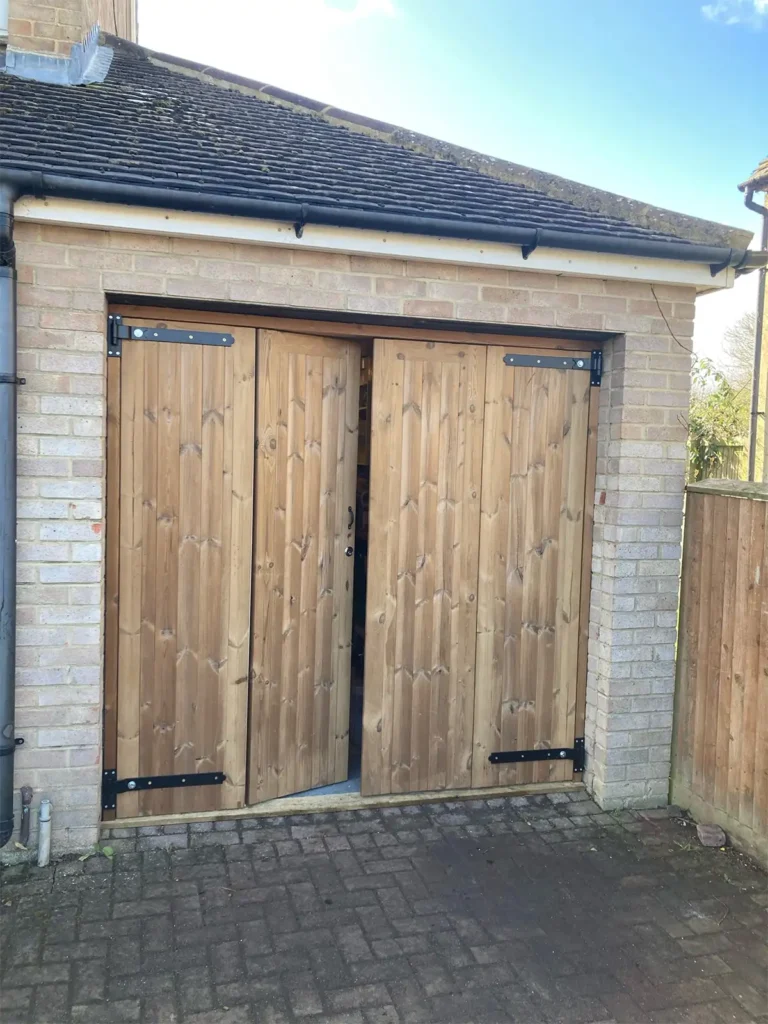
This is perhaps the biggest advantage of side-hinged doors. You can open one leaf and walk straight into the garage without opening the entire door. Consequently, this makes them ideal for garages used as workshops, storage spaces, or home gyms.
Traditional Aesthetic
Side-hinged doors have a timeless, classic appearance. They suit period properties, cottages, and traditional homes perfectly. Furthermore, the ability to add decorative features like glazing, detailing, and traditional handles further enhances their character.
Full Opening Access
When both leaves are open, you get full access to the garage opening. This is particularly useful for larger vehicles, motorhomes, or when you need to move bulky items in and out.
Simple Mechanism
Without the springs, cables, or complex mechanisms found on up-and-over or roller doors, side-hinged doors are mechanically simple. As a result, there are fewer components to wear out or break, which makes them more reliable and easier to maintain.
Easy to Automate
Despite their traditional appearance, side-hinged doors can be automated relatively easily. Electric operators can be fitted to open and close the doors at the touch of a button, offering the perfect blend of old and new.
Good for Workshops
Side-hinged doors are often the preferred choice for garages used as workshops. The ability to open one leaf while working inside provides ventilation and easy access, without having to open the entire door.

Available Materials
Side-hinged doors are available in several materials, each with its own advantages and considerations.
Timber Side-Hinged Garage Door
Timber side-hinged doors offer the most authentic traditional appearance. Craftsmen can make them from oak, cedar, mahogany, or other hardwoods, and you can finish them in a range of paints or stains.
Pros: Beautiful natural appearance; excellent insulation; can be bespoke-made; repairable.
Cons: Requires regular maintenance; expensive; heavy.
Best for: Period properties, listed buildings, and homeowners who prioritise aesthetics.
Steel Side-Hinged Garage Door
Steel side-hinged doors combine the traditional appearance with the durability and security of modern materials. A powder coat finish usually protects them from rust and weathering.
Pros: Strong and secure; low maintenance; affordable; available in a range of colours.
Cons: Can dent; less characterful than timber; may rust if the coating is damaged.
Best for: Security-conscious homeowners; budget-conscious buyers; modern homes.
GRP Side-Hinged Garage Door
GRP (Glass Reinforced Plastic) side-hinged doors offer the look of timber without the maintenance. They’re lightweight, weather-resistant, and available in realistic wood-grain finishes.
Pros: Low maintenance; weather-resistant; good insulation; looks like timber.
Cons: More expensive than steel; limited customisation; can fade over time.
Best for: Coastal areas; homeowners who want the look of timber with less maintenance.
Side-Hinged Garage Door Styles
Side-hinged doors are available in a range of styles to suit different homes.
Traditional Style
Classic panel designs that complement period properties. These doors typically feature raised or recessed panels and traditional hinges and handles.
Contemporary Style
Clean, simple lines that suit modern homes. Contemporary side-hinged doors often feature flush panels, minimal detailing, and sleek hardware.
Carriage House Style
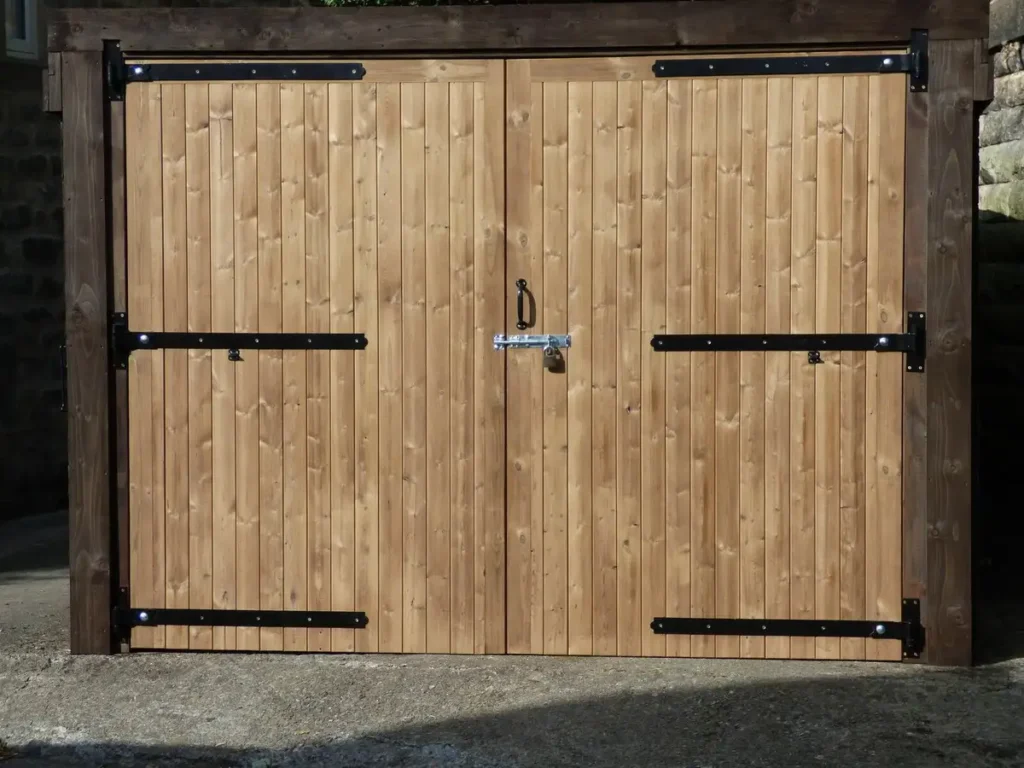
A distinctive style that mimics the appearance of old carriage house doors. These doors feature decorative hardware, cross beams, and a rustic appearance.
Glazed Options
Many side-hinged doors can be fitted with glazing to allow natural light into the garage. This is particularly useful if you use your garage as a workshop or living space.
Average UK Side-Hinged Garage Door Costs
Side-hinged doors are generally priced between up-and-over and timber doors. Here’s what you can expect to pay.
Door Costs
| Material | Approximate Cost (Door Only) |
|---|---|
| Steel side-hinged | £800 – £1,500 |
| Timber side-hinged | £1,500 – £3,000 |
| GRP side-hinged | £1,000 – £2,000 |
Key Installation Considerations
Installing a side-hinged door requires careful planning, particularly around space and clearance.
Clearance Requirements
Side-hinged doors need space to swing outward. This means you need sufficient clearance in front of the garage. Therefore, if your driveway is narrow or your garage is close to a boundary, a side-hinged door may not be suitable.
Minimum clearance needed: At least the width of the door, typically 2-3 metres.
Obstructions
Check for any obstructions that could prevent the doors from opening fully. This includes plants, bins, cars, or neighbouring structures. The doors need to swing freely without hitting anything.
Automation
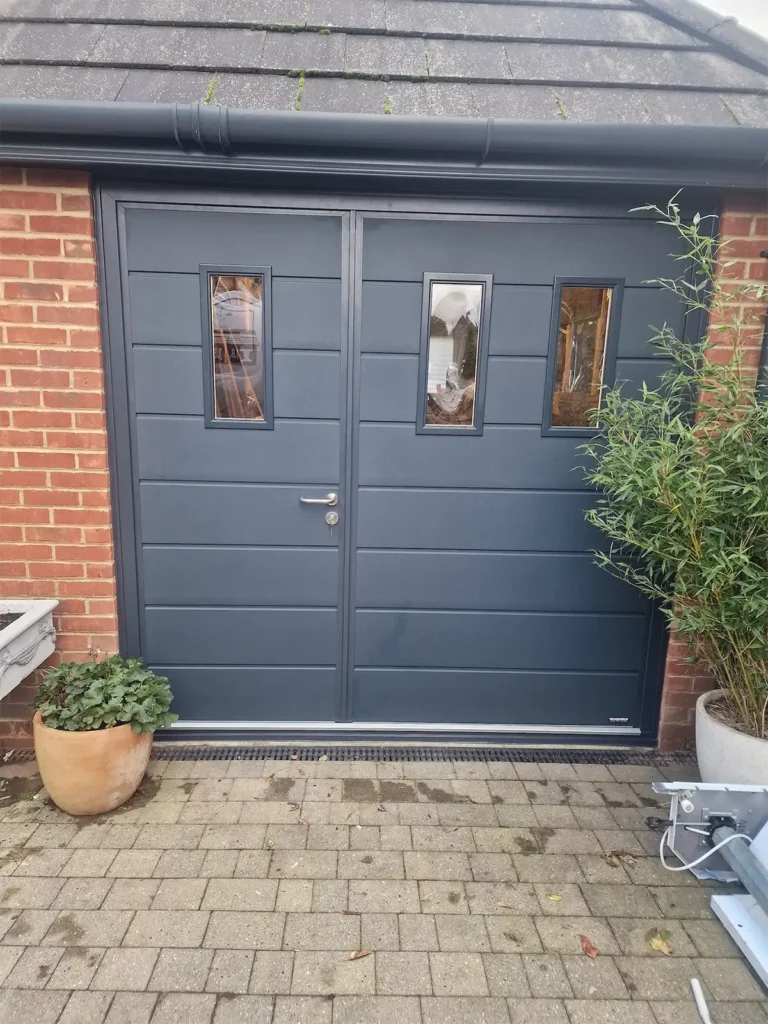
If you’re adding automation, the operators are typically mounted on the inside of the garage, near the top of the door frame. This doesn’t take up much space and keeps them out of the way.
Security
Side-hinged doors need robust locking mechanisms. Traditional locks, deadbolts, and multi-point locking systems are all available. Additionally, some steel side-hinged doors also include security pins or anti-lift devices.
Frame Strength
The frame needs to be strong enough to support the weight of the doors, particularly if you’re installing heavy timber doors. Therefore, ensure the frame is securely fixed to the building structure and in good condition before proceeding.
Pros and Cons of a Side-Hinged Garage Door
| Pros | Cons |
|---|---|
| Easy pedestrian access | Requires clearance to swing outward |
| Traditional, classic appearance | Timber options are expensive |
| Full opening access | May not be suitable for narrow driveways |
| Simple, reliable mechanism | Timber requires regular maintenance |
| Good for workshops and storage | Steel can dent |
| Easy to automate | Less secure than steel alternatives |
Is a Side-Hinged Garage Door Right for Your Home?
The decision comes down to your space, style, and how you use your garage.
Choose Side-Hinged if:
- You have sufficient clearance in front of the garage
- You use your garage as a workshop or storage space
- You value easy pedestrian access
- You want a traditional, classic appearance
- You have a period property or cottage
Choose Another Type if:
- Your driveway is narrow or close to a boundary
- You have limited clearance in front of the garage
- Security is your top priority (consider steel)
- You want a low-maintenance option (consider GRP)
- You have a tight budget (steel roller doors are cheaper)
Side-Hinged Garage Door Summary
A side hinged garage door offers a timeless, practical solution that suits a wide range of homes and uses. Their simple mechanism, easy access, and traditional appearance make them a popular choice for workshops, period properties, and homeowners who value character.
However, they’re not suitable for every home. If you have limited clearance in front of your garage or a narrow driveway, a roller or up-and-over door might be a better choice.
For those who can accommodate them, side-hinged doors offer a blend of practicality and charm that few other door types can match. Whether you choose steel for security, timber for beauty, or GRP for low maintenance, there’s a side-hinged door to suit your home.