

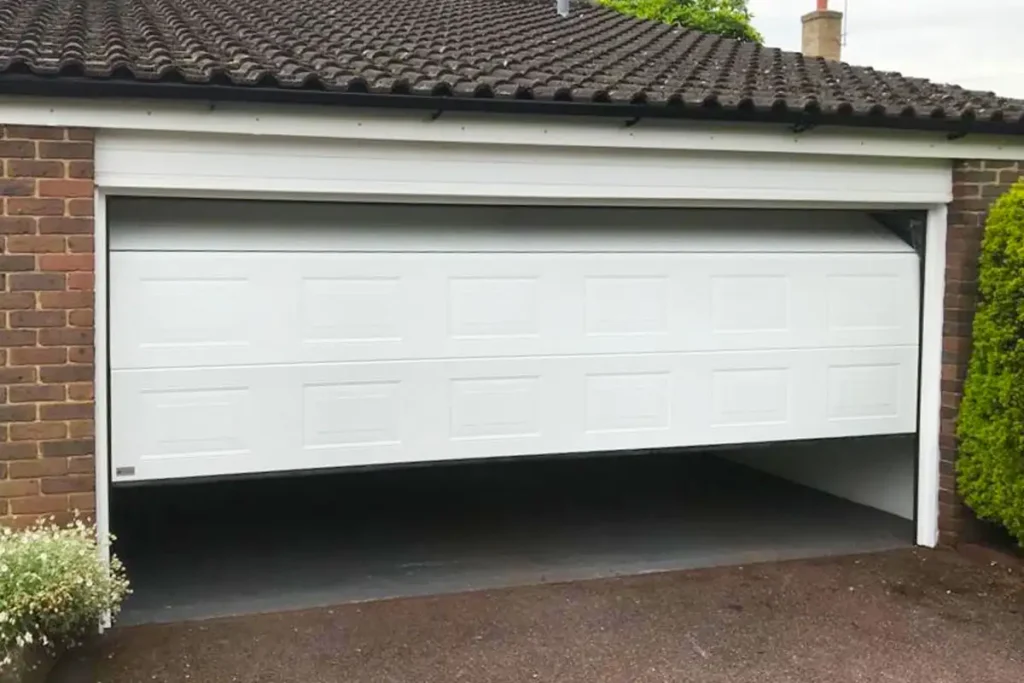
If you’re looking for sectional garage doors that combines modern design, outstanding insulation, and space-saving operation, a sectional garage door could be exactly what you need. Unlike traditional up-and-over doors that swing outward or roller doors that coil into a box, sectional doors are made up of horizontal panels that slide vertically and then tuck away neatly under the ceiling.
As a result, they don’t protrude outside the garage at any point during operation. This makes them an ideal choice if your driveway is short or you need to park close to the door.
This guide covers everything you need to know about sectional garage doors. We’ll explore how they work, the benefits they offer, the materials and styles available, average UK costs, and key installation considerations.
How Sectional Garage Doors Work
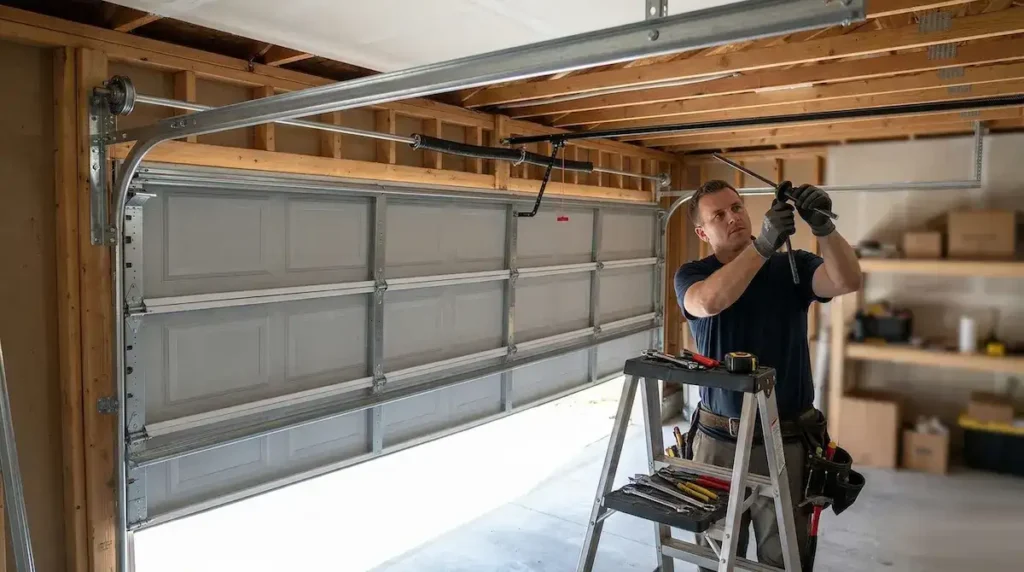
A sectional garage door consists of several horizontal panels, typically four or five, that are connected by hinges. The panels are on tracks fitted to the sides of the garage door opening. When you open the door, the panels travel vertically up the tracks, then curve backwards and run horizontally along the ceiling.
Most sectional doors use torsion springs to counterbalance the weight of the door, which makes them easy to lift manually or with an electric opener. The panels slide smoothly on rollers, and the whole mechanism operates quietly and efficiently.
One of the key advantages of this design is that the door doesn’t swing outward at any point. Consequently, you can park your car right up to the garage door without worrying about clearance. Furthermore, the door doesn’t take up any floor space inside the garage, leaving the entire area free for storage, vehicles, or a workshop.
Benefits of Sectional Garage Doors
Sectional garage doors offer several advantages over other garage door types. Here’s why they’re becoming an increasingly popular choice for UK homeowners.
Outstanding Insulation
Sectional doors generally offer the best insulation of any garage door type. Most modern sectional doors come with double-skinned steel panels and a polyurethane foam core as standard. This construction creates a robust thermal barrier that helps regulate the temperature inside your garage.
If your garage is attached to your house, or you use it as a workshop or home gym, this insulation makes a noticeable difference to warmth and noise levels. In addition, many sectional doors feature full perimeter seals that further reduce draughts and heat loss. This can help cut your energy bills and make your garage a more comfortable space to use throughout the year.

Superior Security
Sectional doors provide a high level of security due to their robust construction. The panels are typically at least 40mm thick and are held together by strong hinges, which makes it difficult for intruders to force their way in. Many sectional doors also come with advanced locking mechanisms and high-strength motors.
What’s more, some manufacturers offer Secured by Design (SBD) accreditation as a free upgrade on their sectional doors, providing extra assurance that these doors are highly secure and will protect your belongings.
Space-Saving Design
Because the door panels slide vertically and then tuck away under the ceiling, they don’t take up any space inside the garage or on the driveway. This makes sectional doors ideal for garages with short driveways or where you need to park close to the door. Similarly, they’re a great choice if you want to maximise drive-through width and height.
Smooth and Quiet Operation
Sectional doors operate smoothly along tracks, which reduces wear and tear on the components. The rollers and hinges allow the door to glide open and closed with minimal effort, and the torsion spring system counterbalances the weight of the door, making it easy to operate manually or with an electric opener. As a result, sectional doors are typically quieter than roller doors, with sound levels around 50 to 55dB during operation.
Long Lifespan
Sectional doors typically last 20 to 25 years, which is five years longer than roller doors on average. This is largely because the panels are simpler than a wound curtain and there are fewer components that wear out over time. Consequently, a sectional door is a long-term investment that will serve your home reliably for decades.
Versatile Design Options
Sectional doors are available in a wide range of finishes, including smooth, woodgrain, and ribbed designs. You can also choose from various styles such as Georgian, coach house, and contemporary designs. Furthermore, you can add glazed panels to allow natural light into your garage.
Available Materials
Sectional doors are available in several materials, each with its own advantages.
Steel Sectional Doors
Steel is the most common material for sectional doors. Most steel sectional doors feature double-skinned panels with a polyurethane foam core, which provides excellent insulation and rigidity.
Pros: Strong and secure; excellent insulation; low maintenance; wide range of colours and finishes.
Cons: Can dent if hit; may rust if the coating is damaged.
Best for: Most homeowners; attached garages; security-conscious buyers.
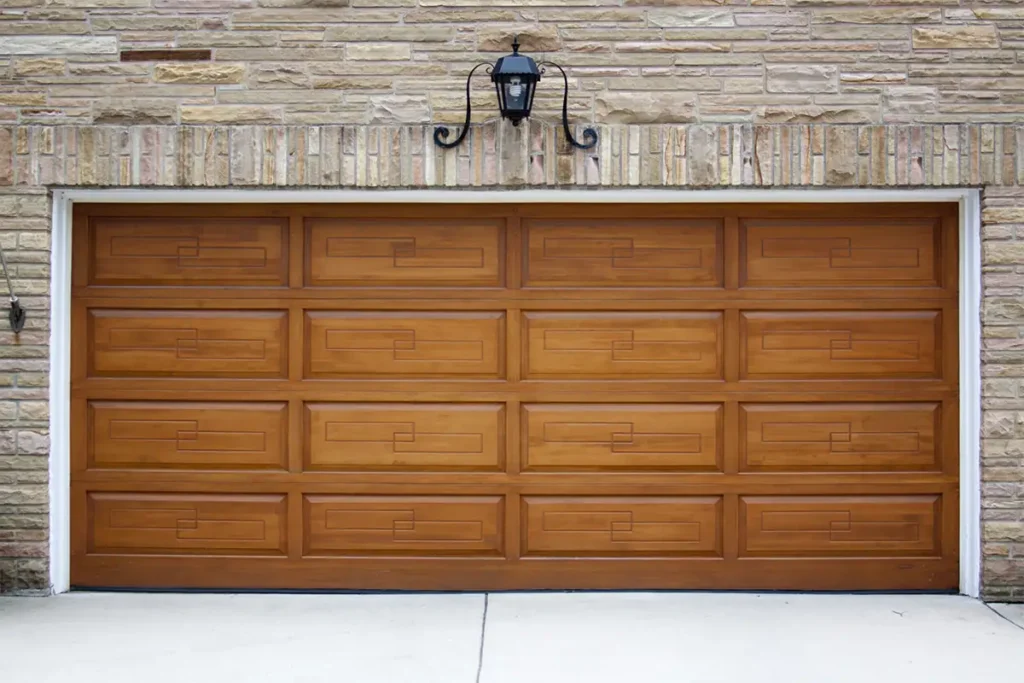
Timber Sectional Doors
Timber sectional doors offer a natural, traditional appearance that complements period properties and characterful homes. They’re available in solid timber construction, which provides excellent insulation and can be finished in a range of paints or stains.
Pros: Beautiful natural appearance; excellent insulation; bespoke options available.
Cons: Requires regular maintenance; expensive; heavy.
Best for: Period properties; homeowners prioritising aesthetics.
GRP Sectional Doors
GRP (Glass Reinforced Plastic) sectional doors offer the look of timber without the maintenance. They’re weather-resistant, lightweight, and available in realistic wood-grain finishes.
Pros: Low maintenance; weather-resistant; looks like timber.
Cons: More expensive than steel; limited customisation; can fade over time.
Best for: Coastal areas; homeowners wanting timber look with less upkeep.
Sectional Garage Door Styles
Sectional doors come in a range of styles to suit different homes.
Ribbed Styles
Ribbed sectional doors feature vertical grooves that add texture and visual interest. Common options include S-Ribbed, M-Ribbed, and L-Ribbed profiles.
Smooth Styles
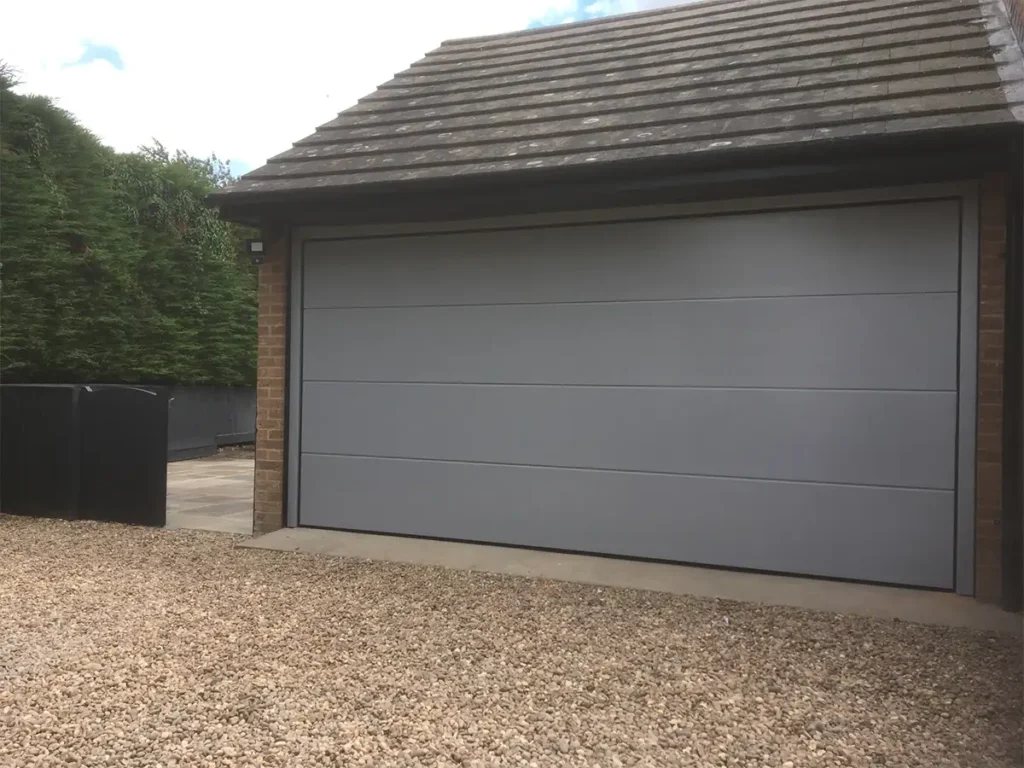
Smooth sectional doors offer a clean, contemporary look that suits modern homes. They’re available in a wide range of colours and finishes.
Woodgrain Styles
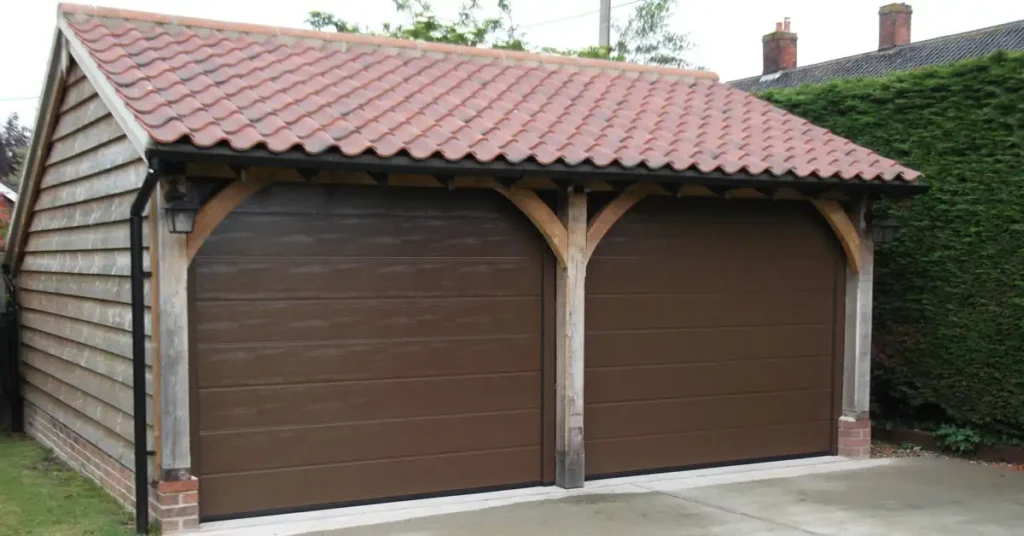
Woodgrain sectional doors combine the warmth and character of timber with the durability of steel. These doors feature realistic timber-effect finishes that mimic oak, cedar, and other hardwoods.
Coach House Styles
Coach house styles mimic the appearance of old carriage house doors. They feature decorative hardware, cross beams, and a rustic appearance.
Glazed Styles
Glazed sectional doors incorporate glass panels to allow natural light into the garage. You can choose from various glazing options, including frosted, tinted, or clear glass.
Average UK Costs
Sectional doors are generally more expensive than up-and-over doors but offer superior insulation and security. Here’s what you can expect to pay.
Door Costs
| Type | Approximate Cost (Door Only) |
|---|---|
| Single steel sectional | £900 – £1,500 |
| Single insulated sectional | £1,200 – £2,000 |
| Double steel sectional | £1,500 – £3,000 |
| Double insulated sectional | £2,000 – £4,000 |
Key Installation Considerations
Installing a sectional door requires careful planning, particularly around space and clearance.
Headroom Requirements
Sectional doors need adequate headroom inside the garage for the horizontal tracks. Typically, you need 200 to 300mm of clearance above the opening. However, low-headroom versions are available for garages with limited space.
Side Room Requirements
You need around 100mm of clearance on each side of the opening for the cable drums and tracks. Make sure you have sufficient space before proceeding with installation.
Automation
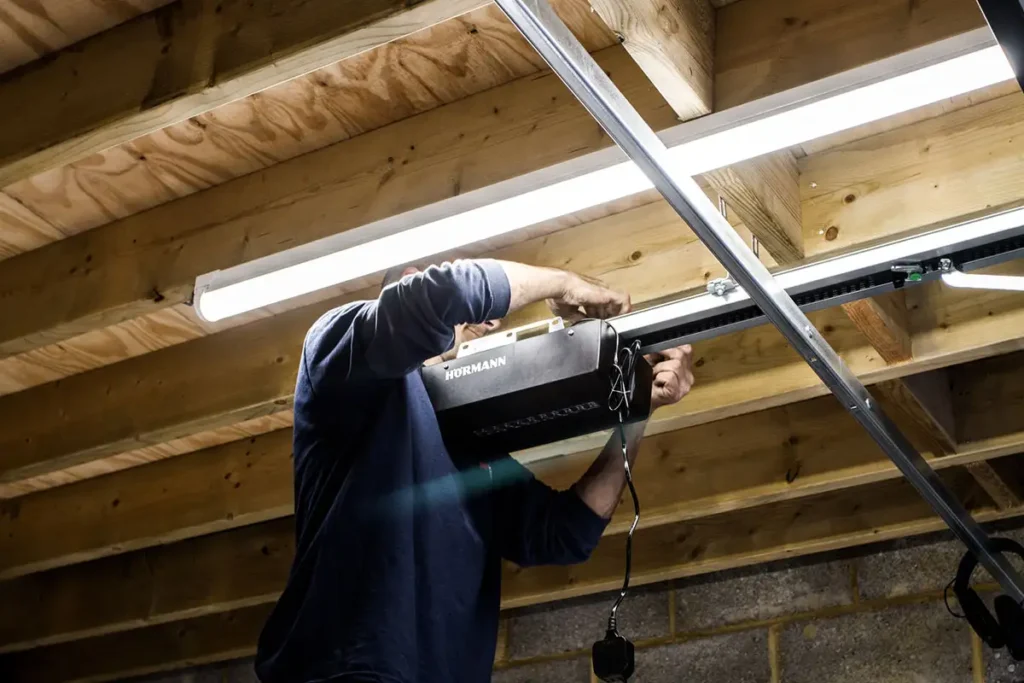
Most sectional doors are electrically operated as standard. If you’re adding automation, you’ll need a power supply near the door. Many manufacturers offer smart openers with Wi-Fi connectivity and smartphone control.
Professional Installation
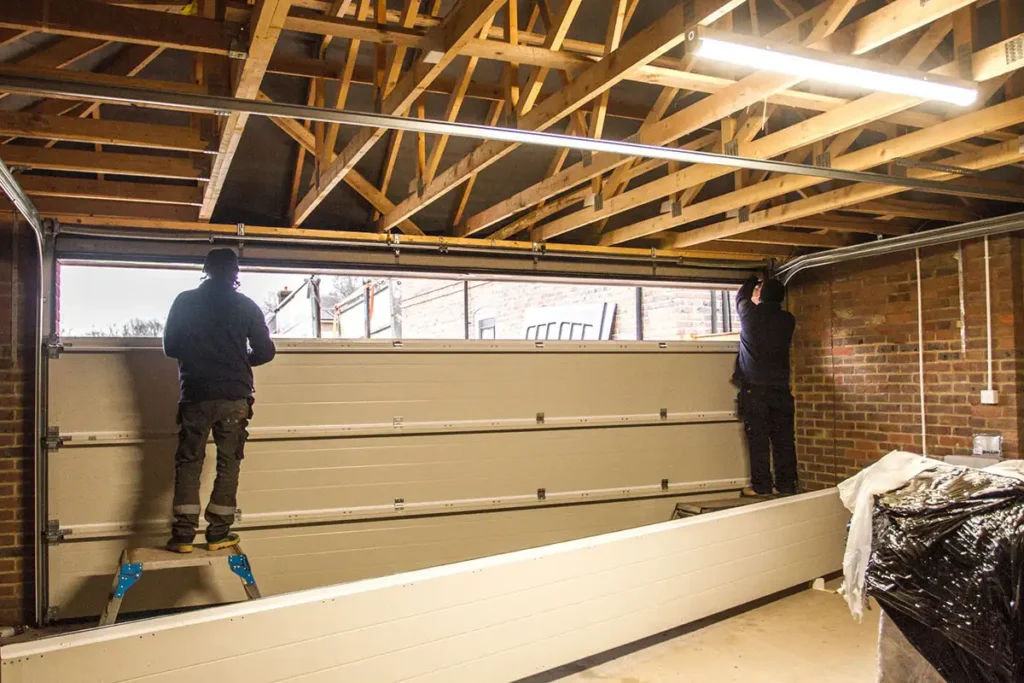
Because of their complexity, sectional doors should be installed by a professional. A professional installer will ensure the door is fitted correctly, the safety features work properly, and the warranty remains valid.
Pros and Cons of Sectional Garage Doors
| Pros | Cons |
|---|---|
| Outstanding insulation | Higher upfront cost than up-and-over |
| Superior security | Requires adequate headroom |
| Space-saving design | More complex installation |
| Smooth, quiet operation | More expensive than roller doors |
| Long lifespan (20-25 years) | May not suit garages with limited ceiling height |
| Wide range of styles and finishes | Heavy panels can be difficult to operate manually |
Is a Sectional Garage Door the Right Choice for You?
The decision comes down to your space, budget, and priorities.
Choose Sectional if:
- You need your garage door insulated as your garage is attached to your home
- You have adequate headroom (200-300mm above the opening)
- You want excellent insulation and security
- You have a short driveway or need to park close to the door
- You value a modern aesthetic
- You’re willing to invest in a premium, long-lasting door
Choose Another Type if:
- You have limited headroom (consider a roller door instead)
- You’re on a tight budget (up-and-over doors are cheaper)
- You want a low-maintenance option (consider GRP)
- You have a very narrow driveway (roller doors may be better)
- You want maximum internal ceiling space (roller doors take less headroom)
Final Thoughts on Sectional Garage Doors
A sectional garage door is a significant investment, but it’s one that pays off in comfort, security, and curb appeal. The outstanding insulation, robust security, and space-saving design make them a popular choice for modern homes, attached garages, and homeowners who want the best.
However, they’re not suitable for every home. If you have limited headroom or a tight budget, a roller door or up-and-over door might be a better fit.
For those who can accommodate them, sectional doors offer a blend of performance, style, and durability that few other door types can match. Whether you choose steel for strength, timber for beauty, or GRP for low maintenance, there’s a sectional door to suit your home.