


Your garage door opener is the unsung hero of your home. It works quietly in the background, day in and day out, lifting hundreds of kilograms of metal without complaint. But when it stops working, you notice immediately.
Choosing the right garage door opener isn’t just about convenience it affects your home’s security, energy efficiency, and even how much noise your neighbours hear.
This guide covers everything you need to know about garage door openers and automation: the different types available, the benefits of upgrading to a smart system, key features to consider, and what you can expect to pay in the UK.
Types of Garage Door Opener
There are four main types of garage door openers available in the UK. Each has its own strengths, weaknesses, and ideal use cases.
Chain-Drive Opener
Chain-drive openers are the most widely used and budget-friendly choice for homeowners. They use a metal chain to pull the door up and down along the track.
Pros:
- Most affordable option
- Reliable and long-lasting
- Easy to find replacement parts
Cons:
- Noisiest of all opener types
- Can cause vibrations through the ceiling if the garage is attached to the house
Best for: Budget-conscious homeowners with detached garages or garages where noise isn’t a concern.
Belt-Drive Opener
Belt-drive openers use a rubber or polyurethane belt instead of a metal chain. This makes them significantly quieter than chain-drive models.
Pros:
- Much quieter than chain-drive
- Smooth, consistent operation
- Less vibration through the house
Cons:
- More expensive than chain-drive
- Belts can wear out over time and may need replacing
Best for: Garages attached to the house, homes with bedrooms above or next to the garage, and homeowners who value a quieter operation.
Screw-Drive Opener
Screw-drive openers use a threaded steel rod to move the door. The motor rotates the rod, which moves the carriage that pulls the door.
Pros:
- Fewer moving parts than chain or belt systems
- Faster operation than chain or belt
- Low-maintenance
Cons:
- Can be noisier than belt-drive
- More expensive than chain-drive
- Can be sensitive to temperature changes
Best for: Homes with limited ceiling space and owners who want a faster, low-maintenance option.
Smart Opener
Smart openers combine a traditional motor with Wi-Fi connectivity, allowing you to control your garage door from your smartphone. You can also integrate them with voice assistants like Alexa or Google Home.
Pros:
- Control your door from anywhere
- Get instant notifications whenever your door opens or closes
- Integrate with other smart home devices
- Some models include built-in cameras
Cons:
- Most expensive option
- Requires a stable Wi-Fi connection
- More features can mean more potential points of failure
Best for: Tech-savvy homeowners who value convenience and remote monitoring.
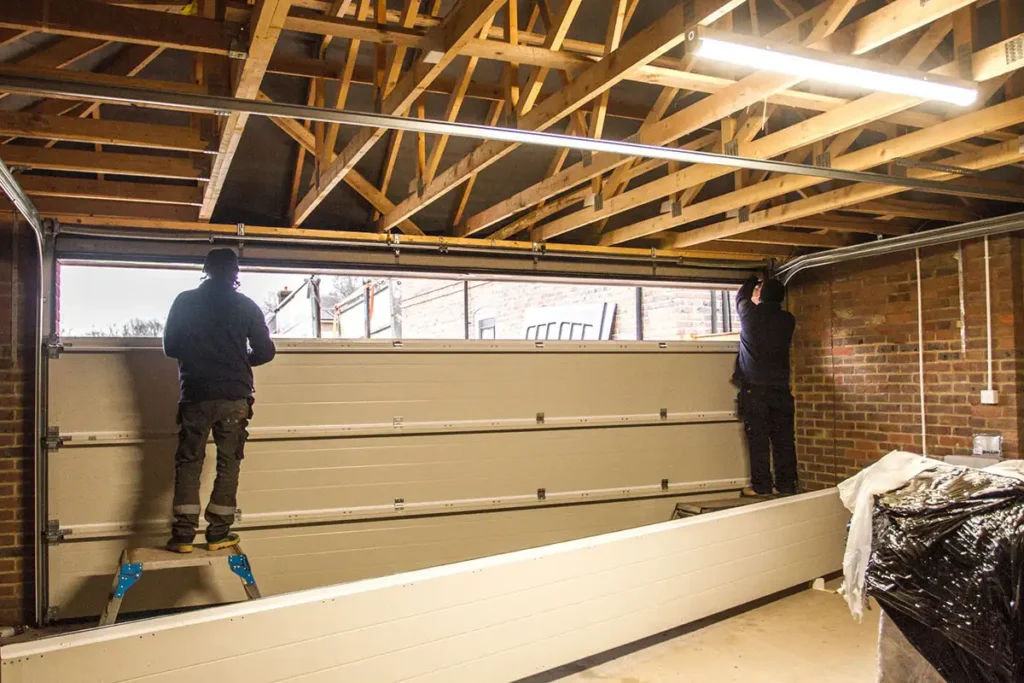
Benefits of Garage Door Opener Automation
Upgrading to an automated garage door offers several advantages beyond simply pressing a button instead of lifting a door manually.
Convenience
The most obvious benefit is convenience. You can open and close your garage door from the comfort of your car, without getting wet in bad weather. Smart openers take this a step further, allowing you to control your door from anywhere in the world.
Security
Modern openers use rolling code technology, which changes the access code every time you use the remote. This prevents thieves from capturing and replicating your remote’s signal.
Smart openers add another layer of security. You can check whether your door is closed from anywhere and receive alerts if it’s opened unexpectedly.
Safety
Automated doors include safety features like auto-reverse, which stops the door if it detects an obstruction. Some smart openers can also integrate with safety sensors that trigger alerts if the door closes on something.
Smart Home Integration
The smart home revolution has reached the garage. Integration with voice assistants like Amazon Alexa, Google Home, and Apple HomeKit enables hands-free control via voice commands. Combined with geofencing, your garage door can automatically open when you arrive home or close when you leave.
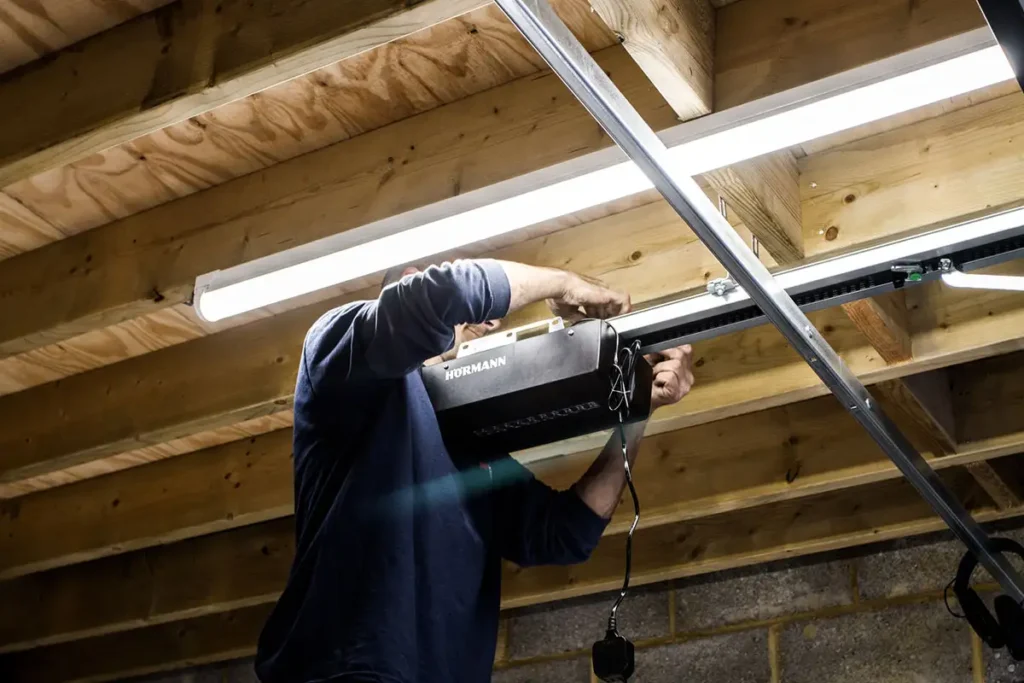
Key Garage Door Opener Features to Consider
Not all garage door openers are created equal. Here are the features worth looking out for when buying a new opener.
Battery Backup
A battery backup ensures your garage door still works during a power cut. This is particularly important if you rely on your garage as your main entrance to the house. Without battery backup, a power cut can trap your car inside and leave you unable to access the garage.
Most openers with battery backup include a simple plug-in unit that recharges automatically when power is restored.
Safety Sensors
All modern openers include safety sensors that stop the door and reverse it if something gets in the way. This is a legal requirement under British Standards for all garage doors with automatic operation.
Smart Home Compatibility
If you already use smart home devices, check whether the opener is compatible with your existing system. Many openers support:
- Amazon Alexa: Close or open the door with your voice
- Google Home: Voice control and routines
- Apple HomeKit: Integration with Apple’s smart home ecosystem
- IFTTT: Custom automations and triggers
Motor Power and Speed
Most residential garage door openers use a motor with between ½ and 1 horsepower. For most UK homes, ½ horsepower is sufficient. If you have a particularly heavy door (e.g., a solid timber door), consider a more powerful motor.
Quiet Operation
If your garage is attached to your house or has bedrooms nearby, a belt-drive or a direct-drive system could be the better choice. Some manufacturers also include rubber vibration mounts or insulation to reduce noise further.
Manual Release
Look for a model with an easy-to-use manual release. This allows you to disconnect the door from the opener and operate it manually if the power is cut or the opener fails. The manual release should be within easy reach, but secure enough that it’s not accessible from outside the garage.
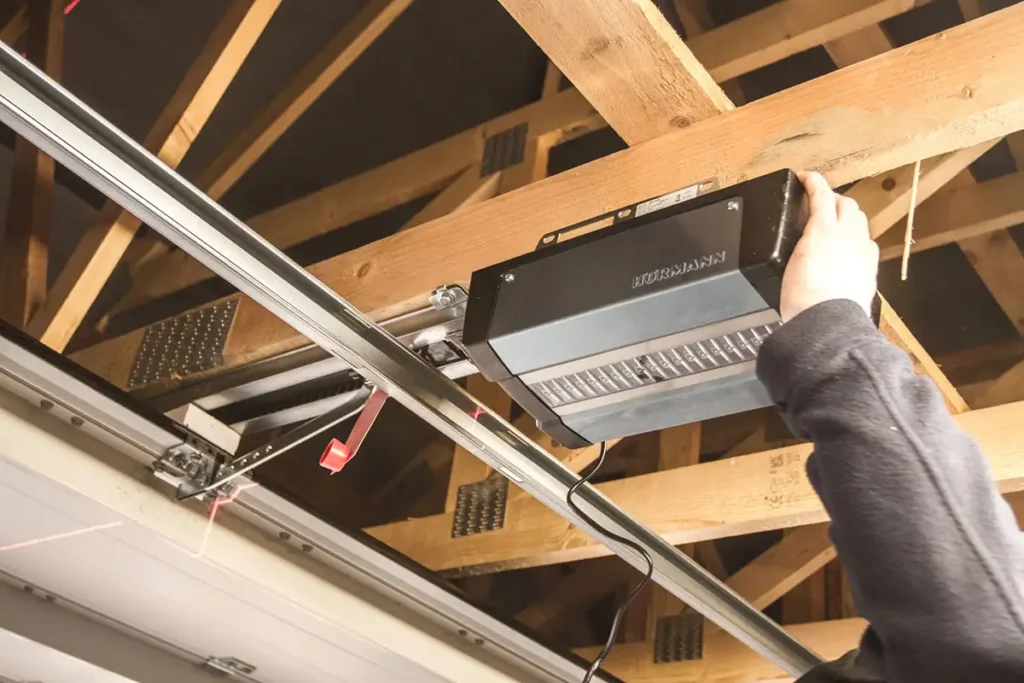
Average Garage Door Opener UK Costs
As with anything, the cost of a garage door opener depends on the type, brand, and features you choose. So what does a garage door opener cost in the UK? Here’s what you should budget for.
Garage Door Opener Costs
| Type | Approximate Cost |
|---|---|
| Chain-drive | £150 – £300 |
| Belt-drive | £200 – £400 |
| Screw-drive | £250 – £400 |
| Smart opener | £300 – £600 |
Installation Costs
If you’re not confident installing an opener yourself, budget for professional installation. This typically costs £100 – £250 depending on the complexity of the install and whether any additional electrical work is needed.
Additional Costs
- Extra remotes: £20 – £50 each
- Keypad access: £30 – £60
- Battery backup add-on: £50 – £100
- Smart home hub: £50 – £150
Which Garage Door Opener Is Right for You?
The best opener for your home depends on your budget, your door type, and your personal priorities.
| Priority | Recommended Opener |
|---|---|
| Budget-friendly | Chain-drive |
| Quiet operation | Belt-drive |
| Low-maintenance | Screw-drive |
| Convenience and tech | Smart opener |
| Attached garage | Belt-drive |
| Detached garage | Chain-drive |
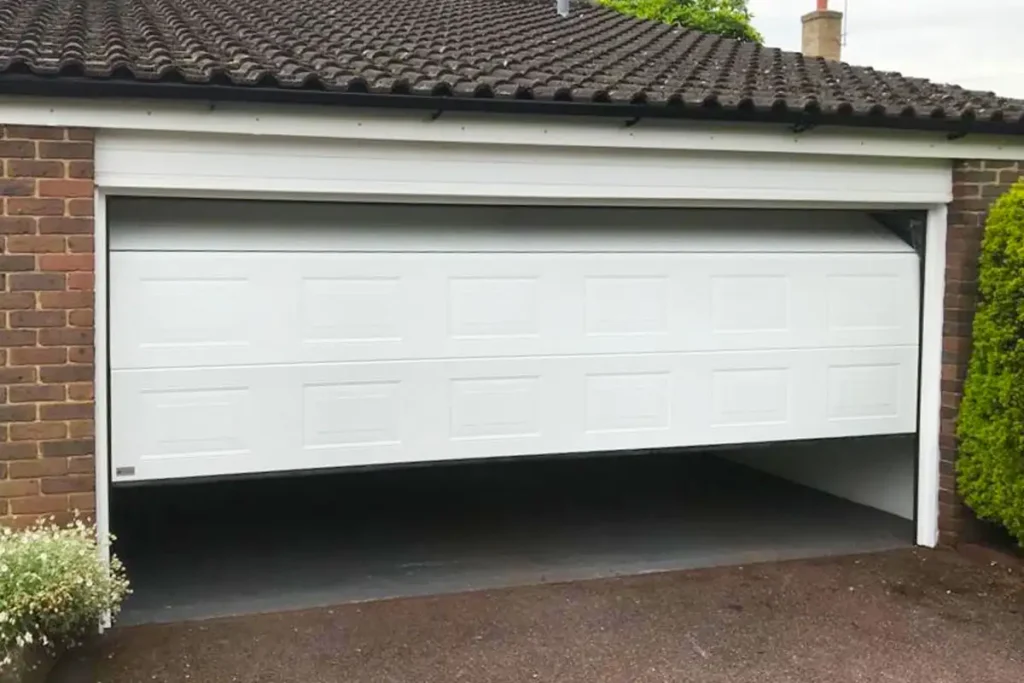
Garage Door Opener Final Thoughts
A garage door opener is a significant investment, but it’s one that pays for itself in convenience, security, and peace of mind. The right opener will serve you reliably for years, while the wrong one can be a source of frustration and noisy mornings.
Take the time to consider your priorities, budget, noise, security, and smart features. Choose an opener that fits your lifestyle. And once you’ve made your choice, remember to test the safety features regularly. It’s the easiest way to protect your family and extend the life of your opener.