


If you’re looking for a garage door that’s affordable, reliable, and widely available, an up-and-over garage doors are likely the first option you’ll come across. In fact, it’s the most common type of garage door in the UK, and for good reason. Up-and-over doors are simple to operate, cost-effective, and suitable for most homes.
However, they’re not without their drawbacks. They require clearance in front of the garage to swing outward, and they don’t offer the same level of insulation as sectional doors. For many homeowners, though, the benefits far outweigh the limitations.
This guide covers everything you need to know about up-and-over garage doors. We’ll explore how they work, the benefits they offer, the two main operating mechanisms, available materials and styles, average UK costs, and key installation considerations.
How Up-and-Over Garage Doors Work
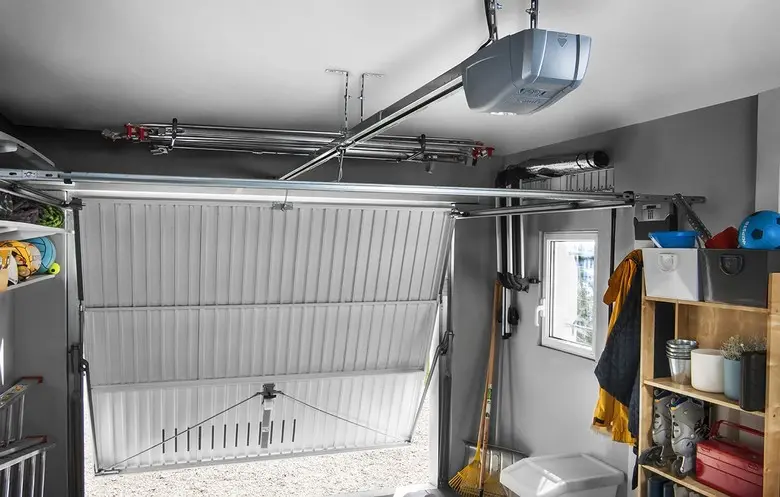
Up-and-over garage doors operate on a simple yet effective principle. When you open the door, it swings outward and then slides up into the garage ceiling. A system of springs and cables counterbalances the door’s weight, making it relatively easy to lift manually.
As a result, the door doesn’t take up any internal floor space, which is a significant advantage if you use your garage for storage. Furthermore, the mechanism is straightforward and has been refined over decades, making it one of the most reliable garage door designs available.
However, because the door swings outward before sliding up, you need adequate clearance in front of the garage to open it fully. Consequently, this can be a limiting factor if your driveway is short or your garage is close to a boundary.
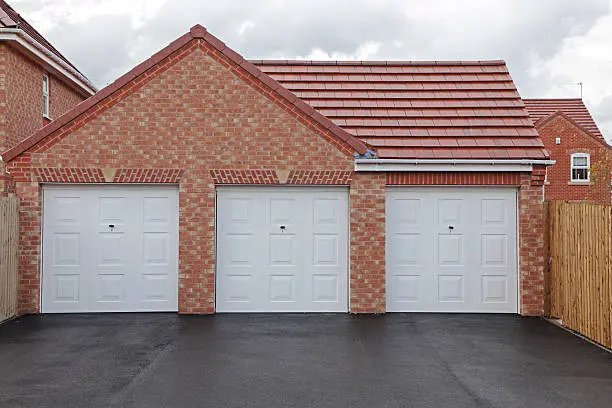
Two Up-and-Over Garage Doors Operating Mechanisms
Up-and-over doors are available with two main operating mechanisms: canopy and retractable.
Canopy Mechanism
The canopy mechanism is the simpler and more affordable option. The door is fitted with springs that counterbalance the weight, and when you lift it, the bottom of the door protrudes about a third of its height outside the garage.
This is the most common type of up-and-over door in the UK, largely because it’s cost-effective and straightforward to install. However, it does require more clearance in front of the garage, and the protruding section can limit your ability to park close to the door.
Retractable Mechanism
The retractable mechanism is a more advanced option that’s typically found on premium up-and-over doors. The door slides fully into the garage, leaving the opening completely clear.
This mechanism requires slightly more headroom inside the garage, but it allows you to park right up to the door without any obstruction. Additionally, retractable doors often feature more robust springs and cables, which makes them easier to operate manually and more compatible with automation.
As a result, retractable up-and-over engineered doors are generally the preferred option if you have the headroom allowance and budget for one.
Benefits of Up-and-Over Garage Doors
Up-and-over doors offer several advantages over other garage door types. Here’s why they remain the most popular choice for UK homeowners.
Affordability
This is perhaps the biggest advantage of up-and-over doors. They’re the most affordable garage door type available, with basic models starting from around £500. If you’re on a tight budget, an up-and-over door is hard to beat.
Wide Availability
Because they’re the most common type of garage door in the UK, up-and-over doors are widely available from a vast number of manufacturers and installers. Consequently, you have plenty of choice and can often find good deals.
Simple Mechanism
The mechanism is straightforward and proven over decades. There are fewer components to wear out or break, which makes up-and-over doors more reliable and easier to maintain than some other types.
Low Maintenance
Up-and-over doors require minimal maintenance. A regular wash with soapy water and an occasional lubrication of moving parts is usually all that’s needed to keep them in good working order.
Versatility
Up-and-over doors are available in a wide range of materials, styles, and colours. You can choose from steel, timber, and GRP, and you can select from various panel designs and finishes to match your home’s style.
Space-Saving
Once fully open, the door sits neatly under the ceiling and doesn’t take up any floor space inside the garage. This leaves the entire garage interior free for vehicles, storage, or a workshop.
Available Up-and-Over Garage Doors Materials
Up-and-over doors are available in several materials, each with its own advantages.
Steel Up-and-Over Garage Doors
Steel is the most common material for up-and-over doors. It offers a good balance of strength, affordability, and low maintenance.
Pros: Strong and secure; affordable; low maintenance; wide range of colours.
Cons: Can dent; less insulated than sectional doors; may rust if the coating is damaged.
Best for: Budget-conscious buyers; security-conscious homeowners; most homes.
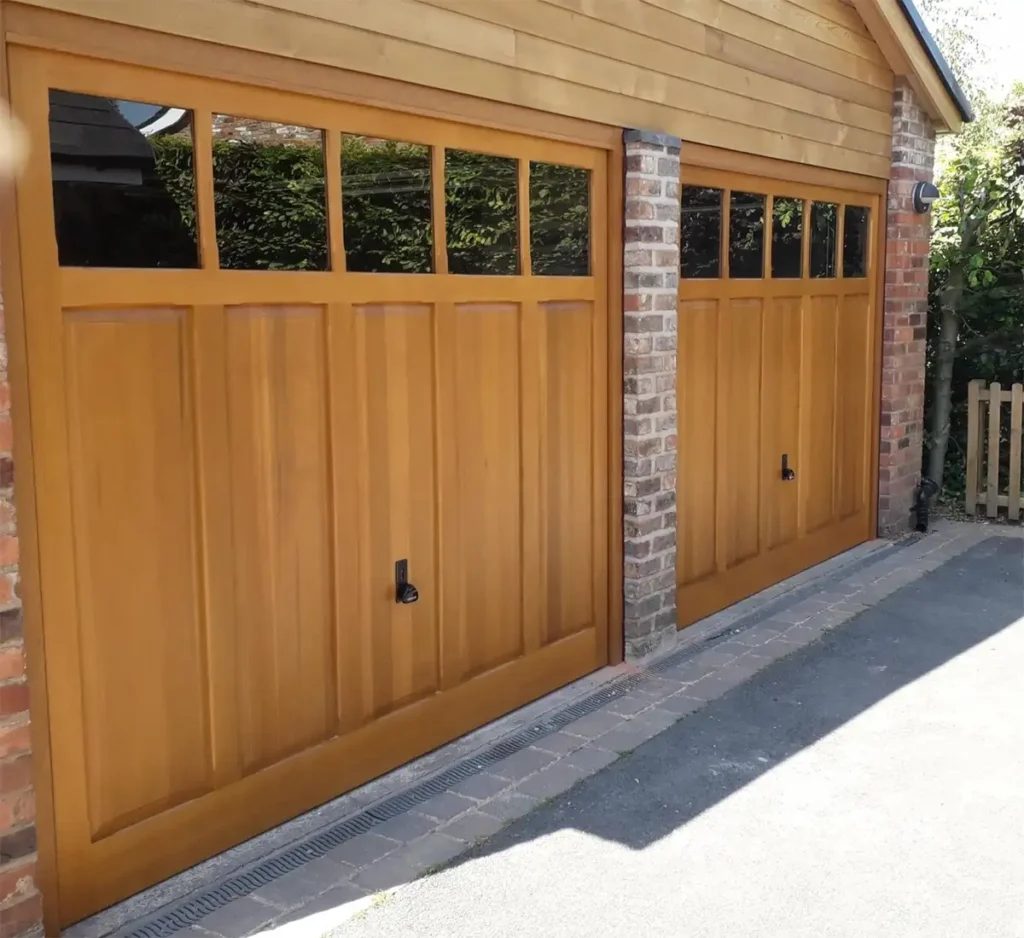
Timber Up-and-Over Garage Doors
Timber up-and-over doors offer a natural, traditional appearance that complements period properties and characterful homes.
Pros: Beautiful natural appearance; excellent insulation; bespoke options available.
Cons: Requires regular maintenance; expensive; heavy.
Best for: Period properties; homeowners prioritising aesthetics.
GRP Up-and-Over Garage Doors
GRP (Glass Reinforced Plastic) up-and-over doors offer the look of timber without the maintenance. They’re weather-resistant, lightweight, and available in realistic wood-grain finishes.
Pros: Low maintenance; weather-resistant; looks like timber.
Cons: More expensive than steel; limited customisation; can fade over time.
Best for: Coastal areas; homeowners wanting timber look with less upkeep.
See our complete guide to garage doors for a full breakdown of types, costs, and maintenance.
Up-and-Over Styles
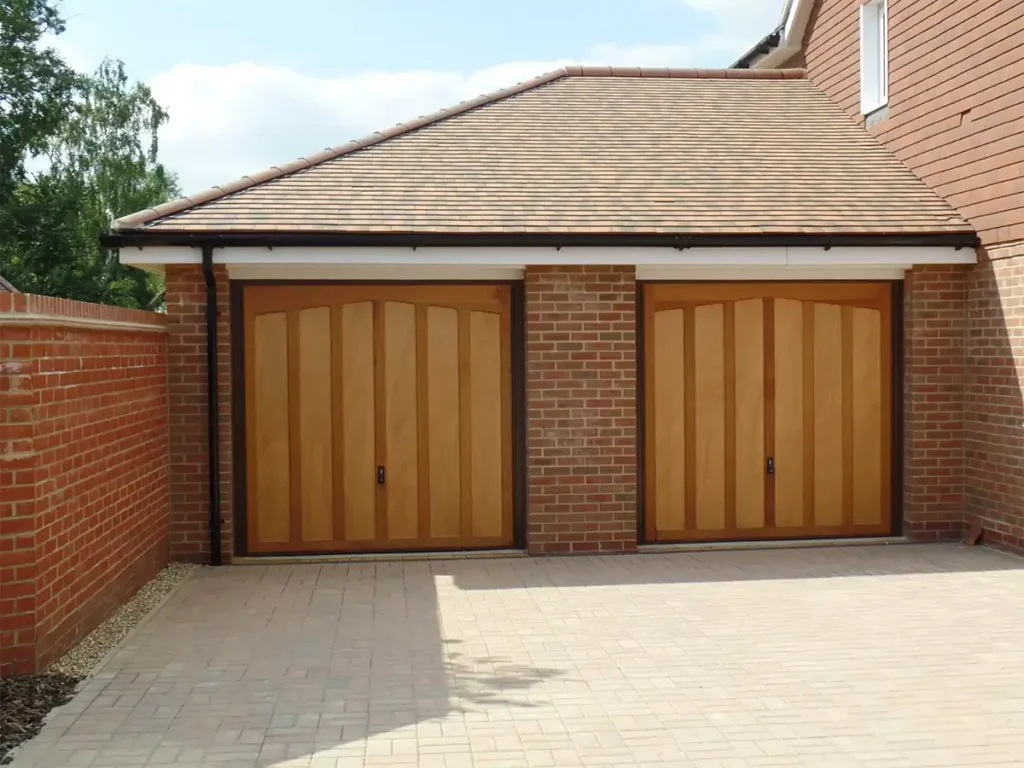
Up-and-over doors come in a range of styles to suit different homes.
Carlton Style
The Carlton style features a crisp, contemporary look with raised and recessed panels. It’s one of the most popular up-and-over designs and suits both traditional and modern homes.
Georgian Style
The Georgian style features a classic, symmetrical design with glazed panels. It’s a popular choice for period properties and homes with a traditional aesthetic.
Windsor Style
The Windsor style features a distinctive, recessed panel design that adds depth and character to the door. It suits both traditional and contemporary homes.
Timber Styles
Timber up-and-over doors offer a warm, natural appearance that complements period properties and characterful homes. They’re available in a range of wood types and finishes.
Glazed Options
Many up-and-over doors can be fitted with glazing to allow natural light into the garage. This is particularly useful if you use your garage as a workshop or living space.

Average Up-and-Over Garage Doors Price
Up-and-over doors are generally the most affordable garage door type. Here’s what you can expect to pay.
Door Costs
| Type | Approximate Cost (Door Only) |
|---|---|
| Single steel up-and-over | £500 – £800 |
| Single insulated steel | £800 – £1,200 |
| Double steel up-and-over | £900 – £1,500 |
| GRP up-and-over | £800 – £1,200 |
| Timber up-and-over | £1,500 – £3,000 |
Key Installation Considerations
Installing an up-and-over door requires careful planning, particularly around space and clearance.
Clearance Requirements
Up-and-over doors need space to swing outward before they slide up into the ceiling. Consequently, you need adequate clearance in front of the garage. If your driveway is short or your garage is close to a boundary, this could be a limiting factor.
Minimum clearance needed: Approximately one-third of the door height (around 0.5-1 metre for most doors).
Headroom Requirements
You need adequate headroom inside the garage for the door to slide up into the ceiling. Typically, you need around 200mm of clearance above the opening for a canopy mechanism and slightly more for a retractable mechanism.
Automation
If you’re adding automation, most up-and-over doors can be fitted with an electric opener. This is a straightforward installation that adds convenience and security.
Professional Installation
While up-and-over doors are simpler to install than sectional doors, professional installation is still recommended to ensure the door is fitted correctly and the safety features work properly.
New to garage doors? Start with our complete guide to garage doors for everything you need to know.
Up-and-Over Door Automation
One of the biggest upgrades you can make to an up-and-over door is to add an electric opener. This adds a huge amount of convenience, allowing you to open and close the door at the touch of a button.
Most up-and-over doors can be automated relatively easily. Belt-drive openers are the quietest option and are recommended if your garage is attached to your house. Chain-drive openers are the most affordable option but are noisier. Screw-drive openers are fast and low-maintenance.
When you add automation, you also get additional security features. Rolling code technology changes the access code every time you use the remote, preventing thieves from capturing and replicating the signal. Smart openers also allow you to check whether the door is closed from anywhere and receive alerts if it’s opened unexpectedly.
Pros and Cons of Up-and-Over Garage Doors
| Pros | Cons |
|---|---|
| Most affordable garage door type | Requires clearance in front of the garage |
| Widely available | Less insulated than sectional doors |
| Simple, reliable mechanism | Canopy mechanism reduces usable driveway space |
| Low maintenance | Can be heavy to operate manually |
| Versatile styles and materials | Not as secure as sectional doors |
| Space-saving when fully open | May not suit short driveways |
Is an Up-and-Over Garage Door Right for Your Home?
The decision comes down to your budget, space, and priorities.
Choose Up-and-Over if:
- You’re on a tight budget
- You have adequate clearance in front of the garage
- You want a simple, reliable door
- You have a traditional or modern home (styles available for both)
- You want a door that’s widely available and easy to replace
Choose Another Type if:
- Your driveway is short or close to a boundary (consider a roller door instead)
- You want excellent insulation (sectional doors are better)
- Security is your top priority (sectional doors are more secure)
- You have limited headroom (consider a roller door)
- You want maximum internal ceiling space (consider a roller door)

Final Up-and-Over Garage Doors Thoughts
An up-and-over garage door is a practical, affordable, and reliable choice for most UK homes. The simple mechanism, low maintenance, and wide availability make them a popular option for homeowners who want a functional door without breaking the bank.
However, they’re not suitable for every home. If you have limited clearance in front of your garage or a short driveway, a roller or sectional door might be a better choice.
For those who can accommodate them, up-and-over doors offer the perfect balance of affordability, reliability, and versatility. Whether you choose steel for durability, timber for beauty, or GRP for low maintenance, there’s an up-and-over door to suit your home.